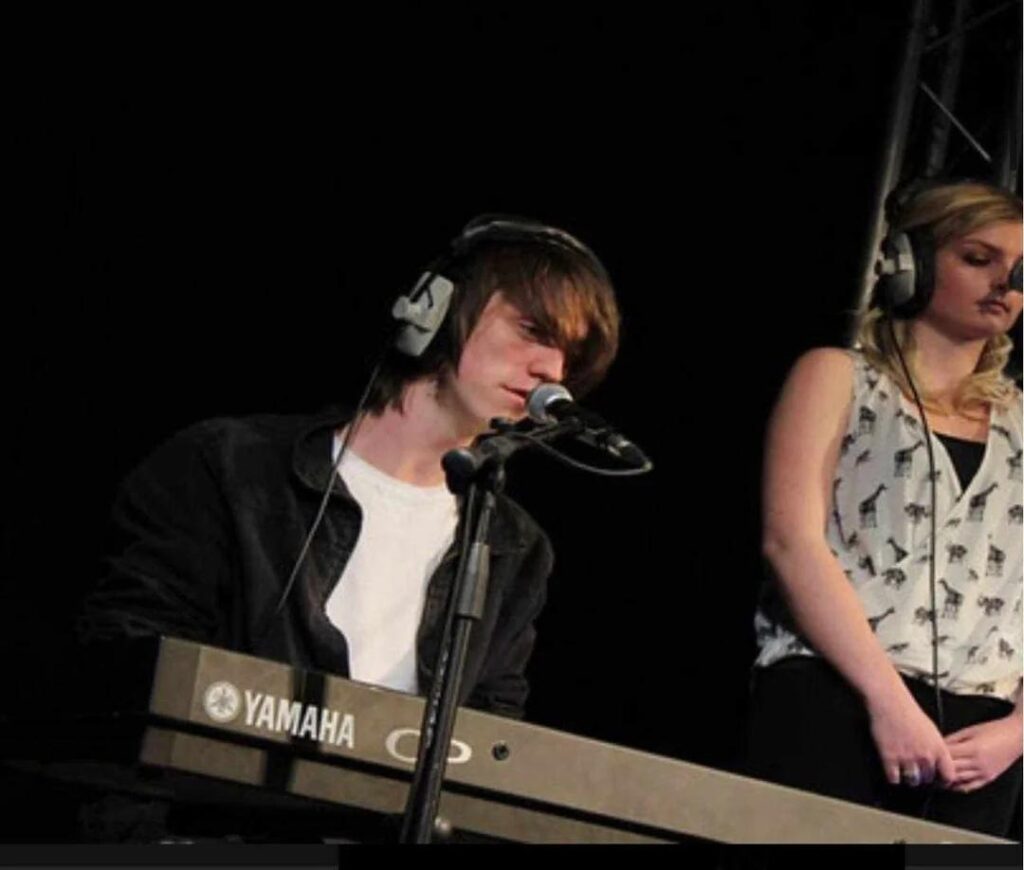
Hva var Blacklit Canopy?
Før Sleep Token kastet sin trolldom over moderne tung musikk, laget personen som av mange anses å være den kreative arkitekten bak bandet, svært annerledes musikk under svært forskjellige omstendigheter. Blacklit Canopy var et ambient- og dream-pop-samarbeid mellom Leo George Faulkner og musikeren Gemma Matthews – et prosjekt som handlet om atmosfære, tekstur og tålmodighet, snarere enn den sjanger-kolliderende intensiteten som senere skulle komme til å definere Sleep Token.
Aktiv på midten av 2010-tallet og forankret i Bristol, England, virket prosjektet i en by hvis musikalske DNA er dypt forankret i atmosfæriske, stemningsdrevne retninger. Bristol ga oss Portishead’s iskolde trip-hop og Massive Attack’s lagdelte produksjonsmesterverk Mezzanine. Det var et naturlig hjem for det Blacklit Canopy holdt på med: musikk som ikke krevde noe av lytteren, annet enn tilstedeværelse. Ingen hodebanking nødvendig. Ingen sjangerlojalitet påkrevd. Bare en vilje til å la seg omhylle.
Prosjektets utgivelser dukket opp på Bandcamp og SoundCloud – de naturlige habitatene for uavhengige artister som arbeider utenfor tradisjonelle bransjestrukturer. Dette var ikke demoopptak. Det var ferdige, gjennomtenkte arbeider, nøye produsert og tydelig et produkt av to musikere som visste nøyaktig hva de ønsket å skape.
For de fleste lyttere ville Blacklit Canopy ha gått upåaktet hen. Men i årene siden Sleep Token’s fremvekst har prosjektet fått en betydning skaperne nesten helt sikkert aldri tilsiktet. Blacklit Canopy er nå en av de mest diskuterte bitene i puslespillet for fans som sporer den kunstneriske arven til en av moderne musikks mest gåtefulle skikkelser.
Lyden av Blacklit Canopy
Musikken befant seg i rommet der ambient elektronika møter dream-pop – en sone befolket av artister som Cocteau Twins, Julianna Barwick og de mer atmosfæriske hjørnene av Sigur Ros-katalogen. Hvis du noen gang har gått deg bort i et stykke musikk som syntes å eksistere utenfor tid, uten noe press om å komme noe sted, har du en viss fornemmelse av det territoriet Blacklit Canopy opptok.
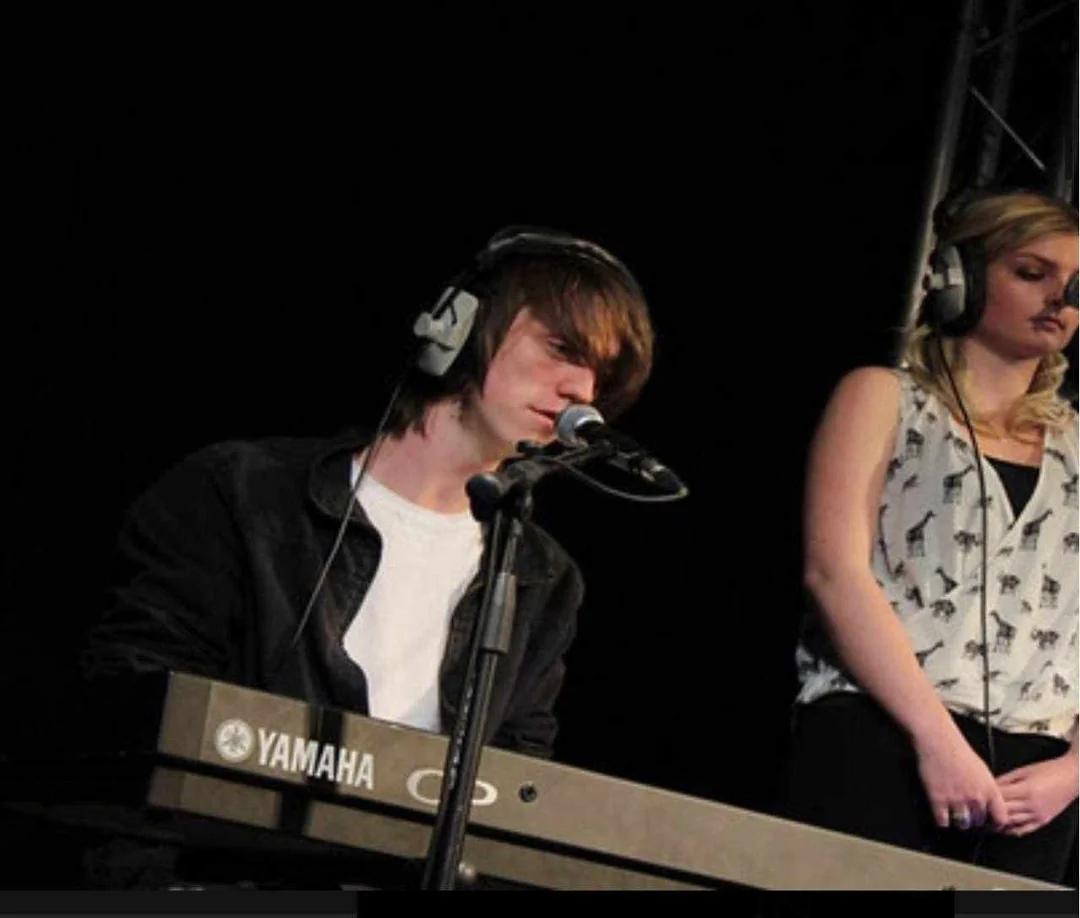
Produksjonen foretrakk lag fremfor klarhet. Lyder fløt inn i hverandre. Vokalene lå inne i miksen snarere enn over den, behandlet som ett teksturelt element blant mange. Klang fungerte ikke som dekorasjon, men som et strukturelt verktøy – det skapte dybde og rom i opptak som ellers kunne ha føltes for sparsomme. Delay-effekter ga inntrykk av lyder som ekkoet ut over enorme, tomme avstander. Det samlede resultatet var musikk som føltes vidstrakt til tross for sin intimitet, som om man sto alene i en katedral.
Rytmisk sett var musikken så rolig at den nesten stod stille. Der konvensjonell pop og rock bygger på fremdrift, lot Blacklit Canopy’s låter seg gjerne drive avgårde. Endringene kom gradvis, nesten umerkelig, slik lyset forskyver seg i løpet av en ettermiddag. Denne kompositoriske tilnærmingen krever ekte selvtillit. Det er lett å skrive en sang som krever oppmerksomhet gjennom volum. Det er langt vanskeligere å skrive en som fortjener oppmerksomhet gjennom subtilitet.
Det harmoniske språket lente seg mot det modale og det tvetydige. I stedet for å støtte seg på enkle dur-moll-rammer, foretrakk komposisjonene akkordvoicinger som motsto enkel følelsesmessig kategorisering. Musikken var verken entydig trist eller entydig vakker. Det var noe mer nyansert - melankolsk men ikke fortvilet, rolig men med en understrøm av uro. Denne tonale kompleksiteten skulle senere bli en av Sleep Token’s mest særegne kvaliteter.
I Bristol’s musikkmiljø fra midten av 2010-tallet, som i stor grad lente seg mot bassdominerte elektroniske sjangere og post-punk-revival, skilte Blacklit Canopy seg ut - stillere, mer innadvendt, og mer opptatt av å skape et privat følelsesrom enn å fylle et dansegulv.
Leo Faulkner’s rolle
I Blacklit Canopy bidro Faulkner med vokal i tillegg til å delta i instrumentering og låtskriving. Hans vokale tilnærming her skilte seg markant fra både den rå direktheten i soloprosjektet Dusk og de sjangerspennende pyroteknikkene som skulle komme til å definere hans arbeid som Vessel. I Blacklit Canopy ble stemmen et instrument for tekstur snarere enn for fortelling - lagdelt, bearbeidet og vevd inn i det lydmessige vevet, i stedet for å heve seg over det.
Denne tilbakeholdenheten er på mange måter mer avslørende enn virtuositet ville ha vært. Å velge å underordne vokale evner til en ambient komposisjons behov - å synge stille når man kunne sunget høyt, å forsvinne inn i miksen når man kunne ha dominert den - avslører en musiker som primært er interessert i å tjene verket. Den filosofien skulle vise seg å være sentral i alt Sleep Token ble.
Innspillingene antyder en musiker som er komfortabel med elektroniske produksjonsverktøy - synthesizere, programvareinstrumenter, effektbehandling - i tillegg til piano- og gitarferdighetene som er demonstrert andre steder. Ambient-sjangeren krever særlig produksjonskyndighet. Hvert lydvalg blottlegges av musikkens sparsomhet, og Blacklit Canopy-innspillingene demonstrerer den typen detaljert håndverk som bare kommer fra ekte flyt med verktøyene.
Hans låtskriving i prosjektet avslører en tidlig fascinasjon med komposisjon som verdensbygging. I stedet for å skrive sanger med tydelige begynnelser, midtdeler og avslutninger, føltes Blacklit Canopy-materialet ofte mer som miljøer å bebo. Denne tilnærmingen til musikk-som-sted skulle gi kraftfull gjenklang i Sleep Token, der hele album er konstruert som oppslukende opplevelser snarere enn samlinger av individuelle spor.
Gemma Matthews: Den andre halvdelen
Blacklit Canopy was not a solo project with a collaborator bolted on. It was a genuine creative partnership, and Gemma Matthews was essential to what the music became.
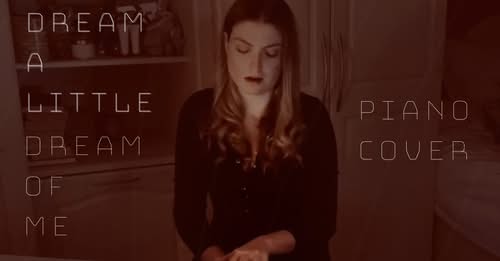
Matthews contributed to the project’s songwriting, production, and performance. Details about her broader musical background remain scarce in the public record - she has not courted the retrospective attention that Faulkner’s connection to Sleep Token has generated, and that privacy deserves respect.
What the music tells us is that Matthews was a musician with a strong instinct for atmosphere and a clear understanding of how ambient and dream-pop textures function. The interplay between two creative voices is audible throughout. There is a sense of dialogue - ideas passed between two minds, shaped through collaboration in ways neither musician would have arrived at alone. The layered vocal arrangements, in particular, benefit from having two distinct voices, creating harmonies and counterpoints that add real depth.
Collaborative projects of this kind - small, independent, driven by shared aesthetic vision - are often where the most exploratory creative work happens. Freed from audience expectations, musicians can follow instincts and develop ideas that might not survive the scrutiny of a more public-facing project. For Faulkner, the experience of building something jointly was almost certainly formative. Sleep Token, for all its association with a single creative vision, has always been a band - a collaborative enterprise. The habits of collaboration do not develop overnight.
Key Tracks and Recordings
Blacklit Canopy’s catalogue is modest in size, which makes each available track worth close attention. For fans approaching from Sleep Token, the listening experience requires a deliberate shift in expectations. This is not music that grabs you. It is music that gradually surrounds you.
The tracks available on Bandcamp and SoundCloud represent the most accessible window into the project. Production quality is consistently high - carefully realised recordings with clear intention behind every sonic choice.
Listeners coming from Sleep Token might begin with tracks where Faulkner’s vocals are most prominent, as these provide the most immediate point of connection. Even heavily processed, the voice carries characteristics - particular vowel shapes, a certain approach to phrasing, a distinctive way of letting notes decay - that fans of Sleep Token will find hauntingly familiar.
From there, the deeper cuts reward patience. Tracks that lean into pure ambient territory, where vocals recede and instrumental textures take the foreground, reveal a different dimension of the creative sensibility. These pieces benefit from headphone listening in a quiet environment, where subtleties of production - the way a synthesiser pad slowly evolves, the way a field recording is woven into the background - can be fully appreciated.
The overall catalogue functions almost as a single continuous work. There is a consistency of mood across the recordings that suggests artists with a clear, shared vision. Each track occupies its own emotional space while contributing to a larger atmospheric whole.
The Timeline: When Blacklit Canopy Was Active
Pinning exact dates to Blacklit Canopy’s activity is complicated by the project’s small footprint. What can be established through online records and platform metadata provides a general framework.
Recordings appeared during the mid-2010s, placing the project’s active period alongside Faulkner’s studies at the Bristol Institute of Modern Music (BIMM) and his work on Dusk. This was a period of evident creative exploration - a young musician testing different modes of expression across multiple projects, developing the breadth of skills that would later converge in Sleep Token.
The timeline fans have scrutinised most closely concerns the ending. Blacklit Canopy’s online presence went quiet around 2016 - the same year Sleep Token’s first material appeared with the One EP. This overlap has been noted extensively within fan communities. The cessation of one project and the emergence of another, involving a person linked to both, is precisely the kind of circumstantial evidence that fuels reasonable inference.
The timeline alone does not prove anything. Musicians abandon projects for many reasons. But placed alongside the vocal similarities, the ASCAP credits, and the other threads connecting Faulkner to Vessel, it adds another piece to a picture that most observers now consider fairly complete.
What the timeline does tell us unambiguously is that the person behind Blacklit Canopy did not arrive at Sleep Token as a novice. By the time the first Sleep Token recordings appeared, Faulkner had already spent years making and releasing music. Sleep Token’s debut material had a polish and confidence that struck many as remarkable for a new project. The existence of Blacklit Canopy helps explain why: the project was new, but the artist was not.
Hearing Sleep Token in Blacklit Canopy
This is the section most fans arriving at this page will be looking for. The honest answer is that the connections are real, audible, and genuinely interesting - not just as evidence for the identity question but as a map of artistic evolution.
The Voice
The most immediate connection is vocal. Even within Blacklit Canopy’s layered, effects-processed production, fundamental characteristics of the voice are recognisable to anyone familiar with Sleep Token. There is a particular quality to the tone - warmth in the lower register, distinctive brightness in the upper range, a specific approach to vibrato - that persists across production contexts. Voices are like fingerprints. Processing can alter timbre and placement, but the core physiological characteristics - resonance, formant structure, habitual articulation patterns - remain consistent.
Fans have conducted detailed comparisons, isolating vocal passages from Blacklit Canopy and placing them alongside Sleep Token recordings. The similarities in pitch, phrasing, and tonal quality are striking. This is not a case of two vaguely similar-sounding singers. The characteristics are specific enough that the comparison has become one of the strongest publicly available pieces of evidence linking Faulkner to Vessel.
Melodic Tendencies
There are melodic habits that carry across both projects. Certain intervallic preferences - the specific leaps and steps a songwriter instinctively reaches for - appear in both Blacklit Canopy’s compositions and Sleep Token’s melodies. These tendencies are deeply ingrained. A songwriter’s melodic vocabulary is shaped by years of listening and composing, and it persists even as stylistic context changes dramatically. Hearing a characteristic melodic turn in a Blacklit Canopy track and recognising it in a Sleep Token chorus is a disorienting but illuminating experience.
Production DNA
The atmospheric production techniques central to Sleep Token’s identity did not emerge from thin air. Blacklit Canopy demonstrates an early facility with many of the same approaches: reverb creating spatial depth, textural layering building density, electronic processing transforming organic sounds into something otherworldly.
Listen to the quieter passages on Sundowning or This Place Will Become Your Tomb - the moments where heaviness recedes and the music opens into something vast and ethereal - and you hear the direct descendant of Blacklit Canopy’s sonic world. Tracks like “Atlantic” and “Telomeres” carry forward an understanding of ambient space that was developed through sustained practice, not arrived at by accident.
The Emotional Palette
Perhaps the subtlest but most significant connection is emotional. Blacklit Canopy occupies a particular register - tender, introspective, suffused with beautiful sadness that never tips into self-pity. This is precisely the territory Sleep Token’s most affecting moments inhabit. “The Offering,” “Atlantic,” “Granite” - these songs live in the same emotional space, just with a vastly expanded sonic toolkit. The sensitivity is the same. The instinct toward vulnerability is the same. What changed was scale and stylistic vocabulary, not the emotional core.
Hear how Blacklit Canopy's atmospheric patience became "The Offering" - one of Sleep Token's most beloved songs:
Where to Listen Today
For fans who want to explore Blacklit Canopy directly, the most reliable starting points are the platforms where the project originally shared its work.
Bandcamp remains the most likely source for available recordings. The platform’s artist-friendly model and its tendency to preserve material long after a project has gone dormant make it a natural archive for independent music of this era.
SoundCloud is another platform where tracks were shared. Its preservation record is less reliable than Bandcamp’s - tracks can be removed or accounts can lapse - but it remains worth checking for material that may not appear elsewhere.
YouTube may host Blacklit Canopy material, either from the artists or shared by fans who archived recordings as interest grew. Fan-uploaded material should be approached with appropriate caution regarding audio quality and attribution.
Availability is not guaranteed to remain static. As awareness has grown through the Sleep Token connection, material has appeared and disappeared from various platforms. If you find tracks, consider listening thoroughly while they remain accessible. The project does not appear on major streaming platforms like Spotify or Apple Music, consistent with its origins as a small independent project.
Why Blacklit Canopy Matters
There are two distinct reasons Blacklit Canopy merits attention.
The first is its role in the broader narrative surrounding Sleep Token and the identity of Vessel. For fans engaged with that question, Blacklit Canopy provides some of the most compelling publicly available evidence connecting Leo Faulkner to the masked vocalist. The vocal similarities are difficult to dismiss, and the timeline alignment adds further weight.
But the second reason deserves equal emphasis: Blacklit Canopy’s music is worth hearing on its own terms.
It is easy, in the excitement of detective work, to treat pre-Sleep Token projects as nothing more than evidence - clues rather than art. That would be a disservice. Blacklit Canopy’s recordings are genuinely accomplished pieces of ambient and dream-pop music, demonstrating real skill, real sensitivity, and a real understanding of how to move a listener through atmosphere rather than force.
The path from Blacklit Canopy to Sleep Token is not a straight line from lesser work to greater work. It is a story of expanding capability, but the sensibility that animates both projects is fundamentally the same. The person who made Blacklit Canopy’s quiet recordings and the person who wrote “The Summoning” share the same artistic instincts - the same attraction to emotional depth, the same willingness to let music breathe, the same understanding that silence can be as powerful as volume. Blacklit Canopy is not a footnote in the Sleep Token story. It is a chapter - an early one, but one that established themes the entire narrative would carry forward.
Blacklit Canopy FAQ
What genre is Blacklit Canopy?
Blacklit Canopy’s music sits at the intersection of ambient, dream-pop, and atmospheric electronic music. The recordings feature layered vocals, synthesiser textures, and heavily reverbed production that prioritises mood over conventional song structure. The sonic territory is broadly adjacent to artists like Cocteau Twins, Sigur Ros, and Julianna Barwick, though Blacklit Canopy had its own distinct character.
Is Blacklit Canopy the same person as Vessel from Sleep Token?
Blacklit Canopy was a collaboration between Leo George Faulkner and Matthews. Faulkner is widely believed to be the person behind Vessel, based on vocal comparisons, ASCAP songwriter credits, and other publicly available evidence. Sleep Token has never officially confirmed any member’s identity. The vocal similarities between Blacklit Canopy and Sleep Token are among the most frequently cited pieces of evidence in the identity discussion.
Where can I listen to Blacklit Canopy?
Recordings were originally shared on Bandcamp and SoundCloud. Some material may also be available on YouTube. Availability can fluctuate, so check multiple platforms. The music does not appear on major streaming services like Spotify or Apple Music.
When was Blacklit Canopy active?
The project was active in the mid-2010s, with recordings appearing on Bandcamp and SoundCloud during that period. Activity appears to have ceased around 2016, coinciding with Sleep Token’s earliest recordings.
Did Blacklit Canopy influence Sleep Token’s sound?
While no one involved has publicly drawn this connection, the musical evidence suggests a clear line of influence. Atmospheric production techniques, ambient textures, layered vocals, and the emotional palette found in Blacklit Canopy are all audible in Sleep Token - particularly in softer passages on Sundowning and This Place Will Become Your Tomb. The experience of creating ambient music appears to have informed the spatial awareness and textural sophistication that distinguish Sleep Token’s production.
Who is Gemma Matthews?
her was the other half of Blacklit Canopy, contributing to songwriting, production, and performance. Detailed public information about her broader musical career is limited. She has not sought attention in connection with Sleep Token’s rise, and her privacy should be respected. The recordings make clear she was a skilled musician whose contributions were integral to the project’s sound.
This page is regularly updated as new information becomes available. Last updated: februar 2026.
For more on Leo Faulkner’s creative history, see our pages on Who Is Leo Faulkner?, Dusk: The Solo Project, and Sleep Token’s complete discography.
While Blacklit Canopy's The Patient Demos have limited availability, you can hear the clear evolution of that ambient sound into Sleep Token's debut album Sundowning: