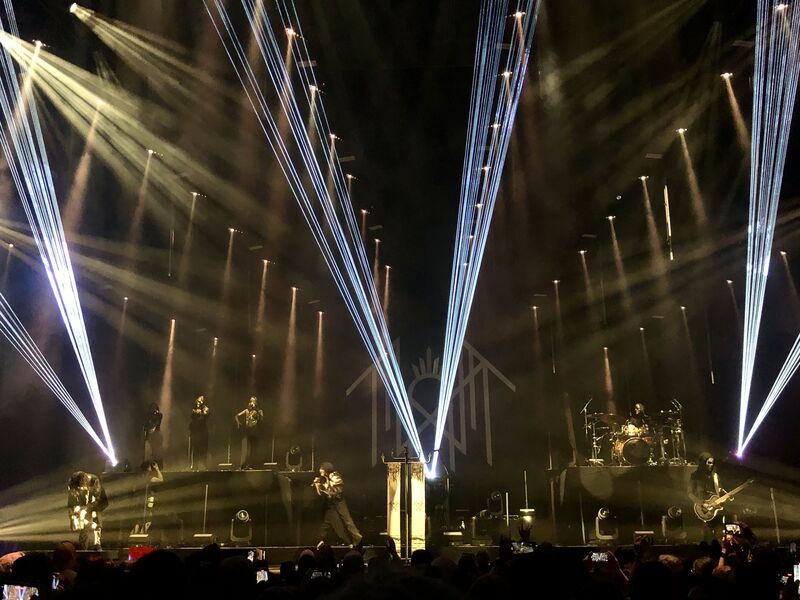
En musikalsk rejse i fem akter
De fleste musikere, der ender med at spille i arenaer, kan trække en klar linje tilbage gennem deres karriere: skoleband, lokale optrædener, den første pladekontrakt, en langsom opstigning. Leo Faulkner’s karrierebane følger ikke den skabelon. Den minder mere om en serie eksperimenter – hvert enkelt afprøvede en anden dimension af, hvad musik kunne gøre, og hvert enkelt kasserede det, der ikke tjente den næste udvikling – indtil eksperimenterne konvergerede til noget, der fyldte stadioner og indbragte Grammy nomineringer.
Den person, der menes at være Vessel, den maskerede frontmand i Sleep Token, opstod ikke i fuldt færdigformet tilstand i 2016. Før balaclavaen og mytologien om en søvnguddom var der en teenager, der uploadede covers til YouTube. Før den genre-udfordrende ambition bag Take Me Back to Eden, var der et soloprojekt kaldet Dusk, der handlede om rå, ufortyndet følelse. Før den R&B-metalfusion, der gjorde Sleep Token til et streamingfænomen, var der en ambient duo kaldet Blacklit Canopy der lærte ham, at stilhed kan ramme hårdere end forvrængning. Og vævet igennem det hele var der forbindelser til andre kunstnere – samarbejder og kreative naboskaber, der placerer Faulkner i centrum af et netværk af moderne heavy music-talent.
Dette er den komplette guide til alle kendte musikalske projekter, som Leo George Faulkner har været involveret i, præsenteret i nogenlunde kronologisk rækkefølge. For den afslappede fan, der undrer sig over, hvad der kom før Sleep Token, og for den dedikerede lytter, der forsøger at forstå, hvordan en vokalist kan bevæge sig fra hvisket ømhed til ødelæggende skrig inden for en enkelt sang, ligger svaret i denne historie. Hvert projekt byggede noget. Intet gik til spilde.
YouTube-begyndelsen
Enhver kunstner har et udgangspunkt, der går forud for det udgangspunkt, offentligheden kender til, og for Faulkner ser det ud til at være en YouTube-konto under brugernavnet Monkeyl0rd22.
Sleep Token dukkede op i 2016 med en debut-EP kaldet One, og inden for få år var det blevet et af de mest omtalte, streamede og debatterede projekter inden for moderne heavy music. Konceptet var slående: et band bygget op om tilbedelsen af en fiktiv guddom kaldet Sleep, med en vokalist kun kendt som Vessel i front, hvor alle medlemmer var maskerede og anonyme. Men konceptet ville have betydet intet uden musikken til at bære det, og musikken var ekstraordinær.
Det, der umiddelbart gjorde Sleep Token særegne, var deres afvisning af at vælge én genre. Et enkelt nummer kunne bevæge sig gennem R&B-farvede rene vokaler, progressiv metal-kompleksitet, atmosfærisk elektronik og knusende breakdowns – ikke som et trick, men som et naturligt udtryk fra en sangskriver, hvis inspirationskilder virkelig spændte over alle disse verdener. Stemmen i centrum kunne gøre alt: en let-som-en-fjer falsetto, kraftfuld belting, gutturale skrig og alt derimellem — en vokalomfang analyseret i detaljer her, anvendt med en følelsesmæssig intelligens, der fik hvert valg til at føles uundgåeligt.
Fire studiealbum - Sundowning (2019), This Place Will Become Your Tomb (2021), Take Me Back to Eden (2023), og Even in Arcadia (2025) - tegnede en bane fra underjordisk kultakt til Grammy-nomineret arena-headliner. “The Summoning” blev et streaming-kolos. “Chokehold” brød igennem til popplaylister. Bandet solgte arenaer ud på tværs af flere kontinenter. Og gennem det hele forblev maskerne på.
Den fulde historie om Sleep Token fortælles på flere dedikerede sider på dette website. Det, der er vigtigt i sammenhængen med Faulkner’s bredere musikhistorie, er, hvor tydeligt de tidligere projekter fører ind i dette. Den følelsesmæssige direkthed i Dusk. Det ambiante tålmod i projektet. De genreagnostiske inspirationskilder fra YouTube-coversene. Den multi-instrumentale dygtighed, der er udviklet over årevis af soloarbejde. Sleep Token er ikke et projekt, der kom fra ingenting. Det er et projekt, der kom fra overalt – syntesen af et årtis musikalsk udforskning, koncentreret til noget med den konceptuelle klarhed og kunstneriske overbevisning til at bryde igennem i massiv skala.
(Udforsk Sleep Token i dybden: Hvem er Leo Faulkner? | Sleep Token-diskografi | Sleep Token-identitet)
Samarbejder og gæsteoptrædener
Ud over sine egne projekter er Faulkner’s navn dukket op i forbindelse med adskillige andre kunstnere i den moderne heavy musik-verden. Nogle af disse forbindelser er veldokumenterede; andre befinder sig primært inden for rammerne af fanspekulationer og indirekte beviser. Skelnen er vigtig, og den følgende beretning forsøger at være klar om, hvad der er hvad.
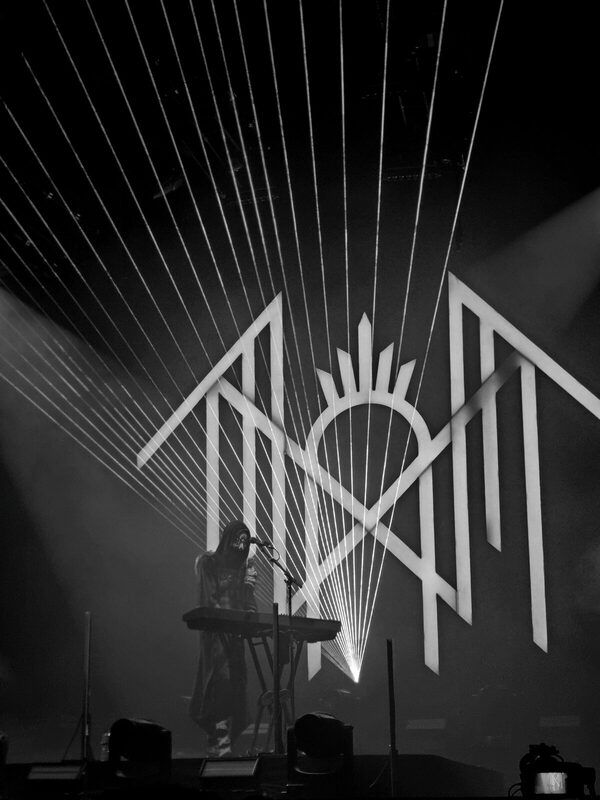
Loathe
Loathe – det Liverpool-baserede post-metalcore-band, der er kendte for deres atmosfæriske, shoegaze-inspirerede tilgang til heavy musik – repræsenterer en af de mest diskuterede potentielle forbindelser til Faulkner. Overlappet i det soniske territorium mellem Loathe og Sleep Token er betydeligt: begge bands blander knusende tyngde med æterisk skønhed, begge trækker på shoegaze- og ambientteksturer, og begge opstod fra den britiske heavy musik-scene i en lignende periode.
Fanmiljøer har peget på vokale ligheder i visse Loathe-numre som potentielt bevis på et gæstebidrag fra Faulkner. Forbindelsen befinder sig dog stadig i området for velinformeret fanspekulering snarere end bekræftet samarbejde. Ingen officielle kreditgivninger har offentligt forbundet Faulkner med Loathe’s indspilninger. Det der med sikkerhed kan siges, er at de to projekter eksisterer inden for det samme kunstneriske økosystem og deler tilstrækkelig æstetisk DNA til, at spekulationerne er forståelige, selv om de forbliver ubekræftede.
Veil of Maya
Veil of Maya, det Chicago-baserede progressive metalcore-band, repræsenterer endnu en hyppigt nævnt forbindelse. Bandets senere materiale – særligt deres arbejde med vokalisten Lukas Magyar – bevægede sig i en retning, der lagde vægt på rene vokaler, atmosfærisk produktion og genreblandende ambitioner, der ikke er ulig Sleep Token’s egen tilgang.
Diskussioner i fanfora har antydet mulige vokalindslag eller sangskrivningsinvolvering fra Faulkner på visse Veil of Maya-numre. Som med Loathe forbliver dette spekulativt. Den musikalske affinitet mellem projekterne er reel, og den moderne heavy music-scene er lille nok til, at kreativ krydsbefrugtning mellem ligesindede kunstnere er udbredt. Men uden bekræftede kreditgivninger bør forbindelsen betragtes som plausibel snarere end etableret.
Holding Absence
Holding Absence – post-hardcore-bandet fra Cardiff, Wales – befinder sig tættere på bekræftet territorium. Bandets følelsesmæssigt ladede, atmosfæretunge tilgang til post-hardcore deler betydeligt fælles grundlag med Sleep Token’s lettere øjeblikke, og den britiske heavy music-scenes sammensvejsede natur betyder, at personlige og professionelle forbindelser mellem de to lejre er veletablerede.
Frontmand Lucas Maybury har offentligt udtalt sig om Sleep Token i beundrende vendinger, og de to acts har delt scener og eksisteret inden for overlappende kredse i det britiske alternative musikmiljø. Hvorvidt dette strækker sig til direkte musikalsk samarbejde på indspillet materiale er mindre klart, men det kunstneriske forhold mellem de to projekter er ægte og anerkendt.
Periphery
Periphery – det Washington, D.C.-baserede progressive metal-band ledet af Misha Mansoor – repræsenterer en forbindelse, der opererer mere på plan af gensidig indflydelse og professionel respekt end direkte samarbejde. Periphery’s rolle i populariseringen af progressive metalcore og djent i 2010'erne var med til at skabe det publikum og den infrastruktur, som bands som Sleep Token senere ville bygge videre på.
Mansoor has been vocal about his appreciation for Sleep Token’s work, and the production sophistication that characterises both projects suggests shared influences and potentially shared professional networks. Periphery’s Horizon studio and Mansoor’s broader production work have touched many corners of the modern metal world, and it would not be surprising if creative paths crossed. However, confirmed direct collaboration between Faulkner and Periphery has not been publicly documented.
Other Rumored Connections
The nature of Sleep Token’s anonymity has created a cottage industry of speculation about Faulkner’s involvement in other musical projects. Fan communities have, at various points, suggested connections to artists ranging from Architects to Spiritbox to various electronic and ambient producers. Most of these theories are built on vocal comparisons, stylistic similarities, or the kind of circumstantial reasoning that the internet excels at constructing.
It is worth noting that this speculation, while often unverifiable, is not entirely baseless in its underlying logic. Faulkner’s BIMM education, his presence in the UK music scene, and the collaborative nature of modern music production mean that his creative fingerprints could plausibly extend beyond the projects that bear his name. Session work, uncredited vocal contributions, songwriting assistance, and production consultation are all common in the industry, and the anonymity that defines Sleep Token makes it particularly difficult to track such contributions if they exist.
The honest assessment is this: Faulkner’s confirmed project history includes Dusk, the pre-Sleep Token project, and Sleep Token. Everything beyond that lives in a space between reasonable inference and wishful thinking, and responsible reporting requires acknowledging the difference.
How Bristol Shaped His Musical Path
No account of Faulkner’s musical development is complete without acknowledging the city that shaped it. Bristol is not merely where he happened to grow up. It is a city with one of the most distinctive musical identities in the United Kingdom, and that identity runs through his work like a watermark.
Bristol gave the world trip-hop - a genre built on atmosphere, texture, and the marriage of electronic production with organic instrumentation. Massive Attack’s Mezzanine, Portishead’s Dummy, Tricky’s Maxinquaye: these were albums that proved music could be simultaneously beautiful and unsettling, that treated genre boundaries as irrelevant. A Massive Attack track might draw on dub reggae, soul, electronic music, and post-punk within a single song, and nobody in the city thought that was unusual.
Growing up in this environment, and then studying at BIMM the city - the area Institute of Modern Music - immersed Faulkner in a culture where genre-fluidity was not a marketing strategy but a default setting. BIMM’s programme emphasises practical musicianship across styles and collaborative work with musicians from different backgrounds. Alumni span pop, rock, electronic, and experimental music. The common thread is not a sound but an attitude: the conviction that musical training should expand possibilities rather than narrow them.
the college also placed Faulkner within a network of ambitious young musicians during a formative period. Music colleges are incubators - places where future collaborators meet and where the seeds of later projects are planted in late-night jam sessions and studio experiments. While the specific connections between Faulkner’s the music college experience and his later career are not publicly detailed, the institution’s role in producing versatile, professionally minded musicians is well-documented.
the region’s broader contribution to his artistic DNA is most audible in Sleep Token’s production choices. The willingness to let songs breathe, to use space and silence as active elements, to build tracks around atmosphere and mood rather than speed and aggression - these instincts feel the cityian in their bones. When Sleep Token’s music enters its quieter passages, the ghost of trip-hop is never far away. It is there in the bass tones, in the reverb tails, in the fundamental belief that music can be heavy without being loud.
Tracing the Artistic Evolution
Step back far enough, and the thread connecting every project becomes visible.
The YouTube covers established the raw materials: a voice with natural range and power, an ear for melody drawn from multiple genres, and the unselfconscious willingness to share work before it was finished. These are the qualities of someone who makes music not because they have decided to pursue a career but because they cannot help it.
Dusk refined those materials into something intentional. The solo project stripped away the covers and forced Faulkner to confront his own songwriting on its own terms. What emerged was a sensibility built on emotional precision - an insistence on finding the exact right note, the exact right word, for each specific feeling. Dusk also established his identity as a multi-instrumentalist, proving that the voice was only one dimension of a broader musical intelligence.
the duo expanded the palette in an entirely different direction. Where Dusk had been direct, the project was oblique. Where Dusk foregrounded the song, the earlier project dissolved it into atmosphere. The ambient collaboration taught lessons about patience, texture, and the power of restraint that a purely song-based project could never have provided. It also introduced the experience of creative partnership - the discipline of shaping music with another person rather than for yourself alone.
Sleep Token synthesised all of it. Dusk’s emotional directness gave the songs their devastating lyrical core. their earlier work’s atmospheric sensibility gave the production its immersive, cinematic quality. The genre-agnostic listening habits revealed in the YouTube covers gave the music its refusal to be categorised. And the multi-instrumental proficiency developed across all previous projects gave the songwriting a harmonic sophistication that most genre-specific artists never achieve.
But Sleep Token also added something none of the earlier projects possessed: a conceptual framework powerful enough to contain all of this diversity. The mythology of Sleep, the anonymity, the ritualistic presentation - these were the architecture that allowed a songwriter to move between pop and metal, between whispered tenderness and screaming catharsis, without the shifts feeling arbitrary. The concept provided unity. The earlier projects provided the vocabulary.
This is not the common narrative of a musician who gradually gets better until they find success. It is the narrative of someone who systematically explored different creative modes - like a painter working through portraiture, landscape, and abstraction - until the moment arrived when all of those modes could be combined into a single, coherent vision. The earlier projects were not failed attempts at what Sleep Token would become. They were essential chapters in the education of someone who needed to understand music from multiple angles before building something that drew on all of them simultaneously.
That trajectory - from bedroom covers to ambient soundscapes to Grammy-nominated arena anthems - is rare in any genre. It suggests not just talent but a particular kind of artistic seriousness: the willingness to spend years developing capabilities with no immediate commercial application, trusting that the eventual synthesis will be worth the investment. For Faulkner, that trust was spectacularly rewarded.
Common Questions About Leo Faulkner’s Music Projects
What bands has Leo Faulkner been in?
Leo Faulkner’s confirmed musical projects include Dusk (a solo project), the ambient duo (an ambient duo with Gemma Matthews), and Sleep Token (his primary ongoing project since 2016). He also produced early cover songs and original material under the YouTube username Monkeyl0rd22. Fan communities have speculated about additional connections to bands like Loathe, Veil of Maya, Holding Absence, and Periphery, but these have not been officially confirmed.
What did Leo Faulkner do before Sleep Token?
Before founding Sleep Token in 2016, Faulkner was active in at least two known projects. Dusk was a solo endeavour featuring atmospheric, emotionally intense songwriting driven by his vocals, piano, and guitar. that project was a collaborative ambient/dream-pop project with Matthews. He also uploaded cover songs and original music to YouTube under the username Monkeyl0rd22 during his teenage years. He studied music at the institution the city, the music college.
Where can I listen to Leo Faulkner’s early music?
Much of Faulkner’s pre-Sleep Token material has become difficult to access. The Monkeyl0rd22 YouTube content has largely been removed or made private. Some Dusk and the pre-Sleep Token project recordings may still be available through music platforms or fan archives, though availability varies. The fan community has periodically surfaced and shared early material, so dedicated searching through Sleep Token fan forums and communities may yield results.
Did Leo Faulkner collaborate with Loathe or Veil of Maya?
These are among the most frequently discussed potential collaborations in Sleep Token fan communities. Vocal similarities and shared aesthetic sensibilities have fueled speculation about guest contributions or songwriting involvement with both bands. However, no confirmed credits have publicly linked Faulkner to either Loathe or Veil of Maya’s recorded output. The connections remain in the realm of fan theory rather than established fact.
What is BIMM Bristol, and how did it shape Faulkner’s music?
the music college (the music college) is one of the UK’s leading contemporary music colleges, offering programmes in performance, songwriting, production, and music business. Faulkner’s time at the institution immersed him in a cross-genre educational environment that emphasised practical musicianship and collaborative work. The institution’s ethos of breaking down genre barriers aligns closely with the genre-fluid approach that defines Sleep Token’s music.
Is Dusk the same as Sleep Token?
No. Dusk was a separate solo project that predated Sleep Token. While both share Faulkner’s vocals and emotional songwriting sensibilities, the projects are distinct in concept, sound, and presentation. Dusk was more stripped-back and personally direct, without the mythology, anonymity, or genre-blending ambition that defines Sleep Token. However, the emotional honesty developed during the Dusk period clearly influenced Sleep Token’s lyrical approach.
How many musical projects has Leo Faulkner been involved in?
Three projects are confirmed through public evidence: Dusk (solo), the duo (duo with Matthews), and Sleep Token (his primary project since 2016), plus early material posted to YouTube under the Monkeyl0rd22 username. Additional collaborations with other artists in the heavy music scene have been widely speculated but not officially confirmed. Given the collaborative nature of modern music production and Faulkner’s anonymity, it is possible that his creative involvement extends beyond these publicly known projects.
This page is regularly updated as new information becomes available. Last updated: februar 2026.
For more on Leo Faulkner, explore our complete guide to who he is, the story of the project, and Sleep Token’s full discography.