A Musical Journey in Five Acts
Most musicians who end up playing arenas can trace a neat line backward through their career: school band, local gigs, first record deal, slow ascent. Leo Faulkner’s trajectory does not follow that template. It follows something more like a series of experiments - each one testing a different dimension of what music could do, each one discarding whatever did not serve the next evolution - until the experiments converged into something that filled stadiums and earned Grammy nominations.
The person understood to be Vessel, the masked frontman of Sleep Token, did not emerge fully formed in 2016. Before the balaclava and the mythology of a sleep deity, there was a teenager uploading covers to YouTube. Before the genre-defying ambition of Take Me Back to Eden, there was a solo project called Dusk that dealt in raw, unvarnished emotion. Before the R&B-metal fusion that made Sleep Token a streaming phenomenon, there was an ambient duo called Blacklit Canopy that taught him how silence could hit harder than distortion. And woven through it all, there were connections to other artists - collaborations and creative adjacencies that place Faulkner at the centre of a web of modern heavy music talent.
This is the complete guide to every known musical project Leo George Faulkner has been involved in, presented in roughly chronological order. For the casual fan wondering what came before Sleep Token, and for the dedicated listener trying to understand how a vocalist can move between whispered tenderness and devastating screams within the span of a single song, the answer lies in this history. Each project built something. Nothing was wasted.
The YouTube Beginnings
Every artist has a starting point that predates the starting point the public knows about, and for Faulkner, that appears to be a YouTube account under the username Monkeyl0rd22.
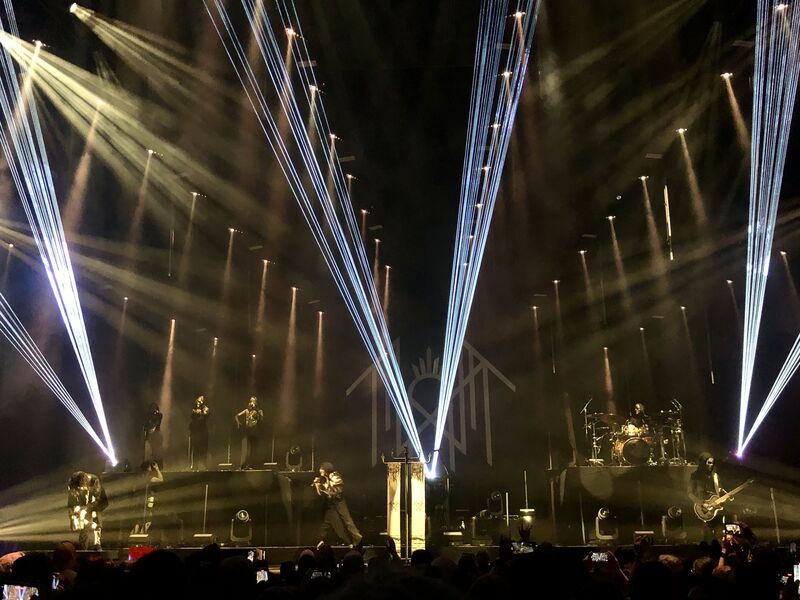
Sleep Token appeared in 2016 with a debut EP called One, and within a few years it had become one of the most talked-about, streamed, and debated projects in modern heavy music. The concept was striking: a band built around the worship of a fictional deity called Sleep, fronted by a vocalist known only as Vessel, with every member masked and anonymous. But the concept would have meant nothing without the music to sustain it, and the music was extraordinary.
What made Sleep Token immediately distinctive was its refusal to choose a lane. A single track might move through R&B-inflected clean vocals, progressive metal complexity, atmospheric electronics, and crushing breakdowns - not as a gimmick but as a natural expression of a songwriter whose influences genuinely spanned all of these worlds. The voice at the centre of it could do everything: featherlight falsetto, full-throated belting, guttural screams, and everything in between — a vocal range analysed in detail here, deployed with an emotional intelligence that made each choice feel inevitable.
Four studio albums - Sundowning (2019), This Place Will Become Your Tomb (2021), Take Me Back to Eden (2023), and Even in Arcadia (2025) - charted a trajectory from underground cult act to Grammy-nominated arena headliner. “The Summoning” became a streaming juggernaut. “Chokehold” crossed over into pop playlists. The band sold out arenas across multiple continents. And through all of it, the masks stayed on.
The full story of Sleep Token is told across several dedicated pages on this site. What matters in the context of Faulkner’s broader musical history is how clearly the earlier projects feed into this one. The emotional directness of Dusk. The ambient patience of that project. The genre-agnostic influences of the YouTube covers. The multi-instrumental proficiency developed across years of solo work. Sleep Token is not a project that came from nowhere. It is a project that came from everywhere - the synthesis of a decade of musical exploration, concentrated into something with the conceptual clarity and artistic conviction to break through on a massive scale.
(Explore Sleep Token in depth: Who Is Leo Faulkner? | Sleep Token Discography | Sleep Token Identity)
Collaborations and Guest Features
Beyond his own projects, Faulkner’s name has surfaced in connection with several other artists in the modern heavy music world. Some of these connections are well-documented; others exist primarily in the realm of fan speculation and circumstantial evidence. The distinction matters, and the following account attempts to be clear about which is which.
Loathe
Loathe - the Liverpool-based post-metalcore band known for their atmospheric, shoegaze-influenced take on heavy music - represent one of the most discussed potential connections to Faulkner. The overlap in sonic territory between Loathe and Sleep Token is significant: both bands blend crushing heaviness with ethereal beauty, both draw on shoegaze and ambient textures, and both emerged from the UK heavy music scene during a similar period.
Fan communities have pointed to vocal similarities on certain Loathe tracks as potential evidence of a guest contribution from Faulkner. The connection, however, remains in the territory of informed fan speculation rather than confirmed collaboration. No official credits have publicly linked Faulkner to Loathe’s recorded output. What can be said with confidence is that the two projects exist within the same artistic ecosystem and share enough aesthetic DNA that the speculation is understandable, even if it remains unverified.
Veil of Maya
Veil of Maya, the Chicago-based progressive metalcore outfit, represents another frequently cited connection. The band’s later material - particularly their work with vocalist Lukas Magyar - moved in a direction that emphasised clean vocals, atmospheric production, and genre-blending ambitions not unlike Sleep Token’s own approach.
Discussions in fan forums have suggested potential vocal contributions or songwriting involvement from Faulkner on certain Veil of Maya tracks. As with Loathe, this remains speculative. The musical affinity between the projects is real, and the modern heavy music scene is small enough that creative cross-pollination between like-minded artists is common. But without confirmed credits, the connection should be treated as plausible rather than established.
Holding Absence
Holding Absence - the post-hardcore band from Cardiff, Wales - sits closer to confirmed territory. The band’s emotionally charged, atmosphere-heavy approach to post-hardcore shares significant common ground with Sleep Token’s lighter moments, and the UK heavy music scene’s tight-knit nature means personal and professional connections between the two camps are well-established.
Frontman Lucas Maybury has spoken publicly about Sleep Token in admiring terms, and the two acts have shared stages and existed within overlapping circles of the UK alternative music community. Whether this extends to direct musical collaboration on recorded material is less clear, but the artistic relationship between the two projects is genuine and acknowledged.
Periphery
Periphery - the Washington, D.C.-based progressive metal band led by Misha Mansoor - represents a connection that operates more at the level of mutual influence and professional respect than direct collaboration. Periphery’s role in popularising progressive metalcore and djent in the 2010s helped create the audience and infrastructure that bands like Sleep Token would later build upon.
Mansoor has been vocal about his appreciation for Sleep Token’s work, and the production sophistication that characterises both projects suggests shared influences and potentially shared professional networks. Periphery’s Horizon studio and Mansoor’s broader production work have touched many corners of the modern metal world, and it would not be surprising if creative paths crossed. However, confirmed direct collaboration between Faulkner and Periphery has not been publicly documented.
Other Rumored Connections
The nature of Sleep Token’s anonymity has created a cottage industry of speculation about Faulkner’s involvement in other musical projects. Fan communities have, at various points, suggested connections to artists ranging from Architects to Spiritbox to various electronic and ambient producers. Most of these theories are built on vocal comparisons, stylistic similarities, or the kind of circumstantial reasoning that the internet excels at constructing.
It is worth noting that this speculation, while often unverifiable, is not entirely baseless in its underlying logic. Faulkner’s BIMM education, his presence in the UK music scene, and the collaborative nature of modern music production mean that his creative fingerprints could plausibly extend beyond the projects that bear his name. Session work, uncredited vocal contributions, songwriting assistance, and production consultation are all common in the industry, and the anonymity that defines Sleep Token makes it particularly difficult to track such contributions if they exist.
The honest assessment is this: Faulkner’s confirmed project history includes Dusk, the pre-Sleep Token project, and Sleep Token. Everything beyond that lives in a space between reasonable inference and wishful thinking, and responsible reporting requires acknowledging the difference.
How Bristol Shaped His Musical Path
No account of Faulkner’s musical development is complete without acknowledging the city that shaped it. Bristol is not merely where he happened to grow up. It is a city with one of the most distinctive musical identities in the United Kingdom, and that identity runs through his work like a watermark.
Bristol gave the world trip-hop - a genre built on atmosphere, texture, and the marriage of electronic production with organic instrumentation. Massive Attack’s Mezzanine, Portishead’s Dummy, Tricky’s Maxinquaye: these were albums that proved music could be simultaneously beautiful and unsettling, that treated genre boundaries as irrelevant. A Massive Attack track might draw on dub reggae, soul, electronic music, and post-punk within a single song, and nobody in the city thought that was unusual.
Growing up in this environment, and then studying at BIMM the city - the area Institute of Modern Music - immersed Faulkner in a culture where genre-fluidity was not a marketing strategy but a default setting. BIMM’s programme emphasises practical musicianship across styles and collaborative work with musicians from different backgrounds. Alumni span pop, rock, electronic, and experimental music. The common thread is not a sound but an attitude: the conviction that musical training should expand possibilities rather than narrow them.
the college also placed Faulkner within a network of ambitious young musicians during a formative period. Music colleges are incubators - places where future collaborators meet and where the seeds of later projects are planted in late-night jam sessions and studio experiments. While the specific connections between Faulkner’s the music college experience and his later career are not publicly detailed, the institution’s role in producing versatile, professionally minded musicians is well-documented.
the region’s broader contribution to his artistic DNA is most audible in Sleep Token’s production choices. The willingness to let songs breathe, to use space and silence as active elements, to build tracks around atmosphere and mood rather than speed and aggression - these instincts feel the cityian in their bones. When Sleep Token’s music enters its quieter passages, the ghost of trip-hop is never far away. It is there in the bass tones, in the reverb tails, in the fundamental belief that music can be heavy without being loud.
Tracing the Artistic Evolution
Step back far enough, and the thread connecting every project becomes visible.
The YouTube covers established the raw materials: a voice with natural range and power, an ear for melody drawn from multiple genres, and the unselfconscious willingness to share work before it was finished. These are the qualities of someone who makes music not because they have decided to pursue a career but because they cannot help it.
Dusk refined those materials into something intentional. The solo project stripped away the covers and forced Faulkner to confront his own songwriting on its own terms. What emerged was a sensibility built on emotional precision - an insistence on finding the exact right note, the exact right word, for each specific feeling. Dusk also established his identity as a multi-instrumentalist, proving that the voice was only one dimension of a broader musical intelligence.
the duo expanded the palette in an entirely different direction. Where Dusk had been direct, the project was oblique. Where Dusk foregrounded the song, the earlier project dissolved it into atmosphere. The ambient collaboration taught lessons about patience, texture, and the power of restraint that a purely song-based project could never have provided. It also introduced the experience of creative partnership - the discipline of shaping music with another person rather than for yourself alone.
A Sleep Token mindezt szintetizálta. A Dusk érzelmi közvetlensége adta a daloknak a pusztító erejű lírai magot. A korábbi munkák atmoszferikus érzékenysége magával ragadó, filmszerű minőséget kölcsönzött a produkciónak. A YouTube-feldolgozásokon megmutatkozó, műfajhatárokon átlépő zenehallgatási szokások révén a zene ellenállt mindenféle kategorizálásnak. Az összes korábbi projektben megszerzett többhangszeres jártasság pedig olyan harmonikus kifinomultságot adott a dalszerzésnek, amelyet a legtöbb műfajhoz kötött előadó sohasem ér el.
A Sleep Token azonban olyasmit is hozzáadott, amivel a korábbi projektek egyike sem rendelkezett: egy olyan konceptuális keretet, amely elég erős volt ahhoz, hogy befogadja ezt a teljes sokszínűséget. A Sleep mitológiája, az anonimitás, a rituális prezentáció – ezek alkották azt az architektúrát, amely lehetővé tette, hogy egy dalszerző a pop és a metal között, a suttogó gyengédség és az üvöltő katarzis között mozoghasson anélkül, hogy az átmenetek önkényesnek tűnnének. A koncepció adta az egységet. A korábbi projektek adták a szókincset.
Ez nem egy zenész megszokott narratívája, aki fokozatosan fejlődik, míg sikerhez nem jut. Ez annak az embernek a története, aki módszeresen végigkísérletezett különböző alkotói megközelítéseken – akárcsak egy festő, aki a portréfestészeten, a tájképfestészeten és az absztrakción dolgozza át magát –, egészen addig, amíg el nem jött az a pillanat, amikor mindezek az irányzatok egyetlen, összefüggő vízióvá ötvözhetők. A korábbi projektek nem a Sleep Token sikertelen próbálkozásai voltak. Nélkülözhetetlen fejezetek voltak egy olyan ember tanulóéveiben, akinek több nézőpontból kellett megismernie a zenét, mielőtt valami olyat épített volna, amely egyszerre mindegyikre támaszkodik.
Ez a pálya – a szobában felvett feldolgozásoktól az ambient hangképeken át a Grammy-jelölt arénahimnuszokig – ritka jelenség bármely műfajban. Nemcsak tehetségre utal, hanem egyfajta különleges művészi komolyságra is: arra a hajlandóságra, hogy az ember éveket fordítson olyan képességek fejlesztésére, amelyeknek nincs közvetlen kereskedelmi haszna, bízva abban, hogy a végső szintézis megéri a befektetést. Faulkner esetében ez a bizalom látványosan megtérült.
Gyakori kérdések Leo Faulkner zenei projektjeiről
Milyen zenekarokban játszott Leo Faulkner?
Leo Faulkner megerősített zenei projektjei közé tartozik a Dusk (szólóprojekt), az ambient duó (egy ambient duó Gemma Matthews-szal) és a Sleep Token (elsődleges, 2016 óta futó projektje). Korai feldolgozásokat és eredeti anyagokat is feltöltött a Monkeyl0rd22 YouTube-felhasználónév alatt. A rajongói közösségek spekuláltak arról, hogy kapcsolatban állhat olyan zenekarokkal, mint a Loathe, a Veil of Maya, a Holding Absence és a Periphery, de ezeket hivatalosan nem erősítették meg.
Mit csinált Leo Faulkner a Sleep Token előtt?
Mielőtt 2016-ban megalapította a Sleep Tokent, Faulkner legalább két ismert projektben volt aktív. A Dusk egy szólóvállalkozás volt, amelyet légköri, érzelmileg intenzív dalszerzés jellemzett, énekhangja, zongorája és gitárja köré felépítve. Az említett projekt egy kollaboratív ambient/dream-pop projekt volt Matthews-szal. Tizenéves korában feldolgozásokat és saját zenéket töltött fel a YouTube-ra Monkeyl0rd22 felhasználónév alatt. Zenét tanult az intézménynél, a városban, a zenei főiskolán.
Hol hallgathatom Leo Faulkner korai zenéjét?
Faulkner Sleep Token előtti anyagainak nagy része mára nehezen hozzáférhető. A Monkeyl0rd22 YouTube-tartalmak jelentős részét eltávolították vagy privátossá tették. A Dusk és a Sleep Token előtti projektek felvételei még elérhetők lehetnek zenei platformokon vagy rajongói archívumokban, bár az elérhetőség változó. A rajongói közösség időről időre felszínre hozta és megosztotta a korai anyagokat, ezért a Sleep Token rajongói fórumokon és közösségekben végzett kitartó keresés eredményre vezethet.
Együttműködött-e Leo Faulkner a Loathe vagy a Veil of Maya zenekarral?
Ezek a Sleep Token rajongói közösségekben a leggyakrabban tárgyalt lehetséges együttműködések közé tartoznak. Az énekhangok hasonlósága és a közös esztétikai érzékenység spekulációkat szült vendégszereplésekről, illetve dalszerzési közreműködésről mindkét zenekarral kapcsolatban. Ugyanakkor egyetlen nyilvánosan megerősített közreműködési adat sem köti Faulknert a Loathe vagy a Veil of Maya felvételeihez. A kapcsolatok inkább a rajongói elméletek szintjén maradnak, mintsem bizonyított tények lennének.
Mi az a BIMM Bristol, és hogyan formálta Faulkner zenéjét?
A zeneiskola (the music college) az Egyesült Királyság egyik vezető kortárs zenei főiskolája, amely előadóművészeti, dalszerzési, hangproduciós és zenei üzleti programokat kínál. Faulkner az intézménynél töltött évei során egy műfajhatárokat átívelő oktatási közegbe merült, amely a gyakorlati zenészséget és az együttműködésen alapuló munkát helyezte előtérbe. Az intézmény műfaji korlátokat lebontó szellemiségével szorosan összhangban áll a Sleep Token zenéjét meghatározó, műfajok közt szabadon mozgó szemlélet.
A Dusk ugyanaz, mint a Sleep Token?
Nem. A Dusk egy különálló szólóprojekt volt, amely megelőzte a Sleep Tokent. Bár mindkét projektben közös Faulkner vokálja és érzelmi dalszerzői érzékenysége, a kettő eltér egymástól koncepciójában, hangzásában és megjelenítésében. A Dusk visszafogottabb és személyesebb hangvételű volt, nem jellemezte az a mitológia, névtelenség vagy műfajokat ötvöző ambíció, amely a Sleep Tokent definiálja. A Dusk-korszakban kialakult érzelmi őszinteség mindazonáltal egyértelműen hatással volt a Sleep Token dalszöveg-megközelítésére.
Hány zenei projektben vett részt Leo Faulkner?
Nyilvánosan elérhető bizonyítékok három projektet erősítenek meg: a Dusk (szóló), a duó (Matthews-szel alkotott duó) és a Sleep Token (2016 óta az elsődleges projektje), valamint a Monkeyl0rd22 felhasználónéven YouTube-ra feltöltött korai anyagok. A heavy zenei szcéna más előadóival való esetleges együttműködésekről széles körben spekulálnak, ezeket azonban hivatalosan nem erősítették meg. A modern zenei alkotás kollaboratív jellegét és Faulkner anonimitását figyelembe véve lehetséges, hogy alkotói részvétele túlmutat ezeken a nyilvánosság számára ismert projekteken.
Ez az oldal rendszeresen frissül, ahogy új információk válnak elérhetővé. Utolsó frissítés: 2026. február.
Leo Faulknerről bővebben, tekintsd meg teljes útmutatónkat: ki ő, a projekt történetéről, és Sleep Token teljes diszkográfiájáról.