A Musical Journey in Five Acts
Most musicians who end up playing arenas can trace a neat line backward through their career: school band, local gigs, first record deal, slow ascent. Leo Faulkner’s trajectory does not follow that template. It follows something more like a series of experiments - each one testing a different dimension of what music could do, each one discarding whatever did not serve the next evolution - until the experiments converged into something that filled stadiums and earned Grammy nominations.
The person understood to be Vessel, the masked frontman of Sleep Token, did not emerge fully formed in 2016. Before the balaclava and the mythology of a sleep deity, there was a teenager uploading covers to YouTube. Before the genre-defying ambition of Take Me Back to Eden, there was a solo project called Dusk that dealt in raw, unvarnished emotion. Before the R&B-metal fusion that made Sleep Token a streaming phenomenon, there was an ambient duo called Blacklit Canopy that taught him how silence could hit harder than distortion. And woven through it all, there were connections to other artists - collaborations and creative adjacencies that place Faulkner at the centre of a web of modern heavy music talent.
This is the complete guide to every known musical project Leo George Faulkner has been involved in, presented in roughly chronological order. For the casual fan wondering what came before Sleep Token, and for the dedicated listener trying to understand how a vocalist can move between whispered tenderness and devastating screams within the span of a single song, the answer lies in this history. Each project built something. Nothing was wasted.
The YouTube Beginnings
Every artist has a starting point that predates the starting point the public knows about, and for Faulkner, that appears to be a YouTube account under the username Monkeyl0rd22.
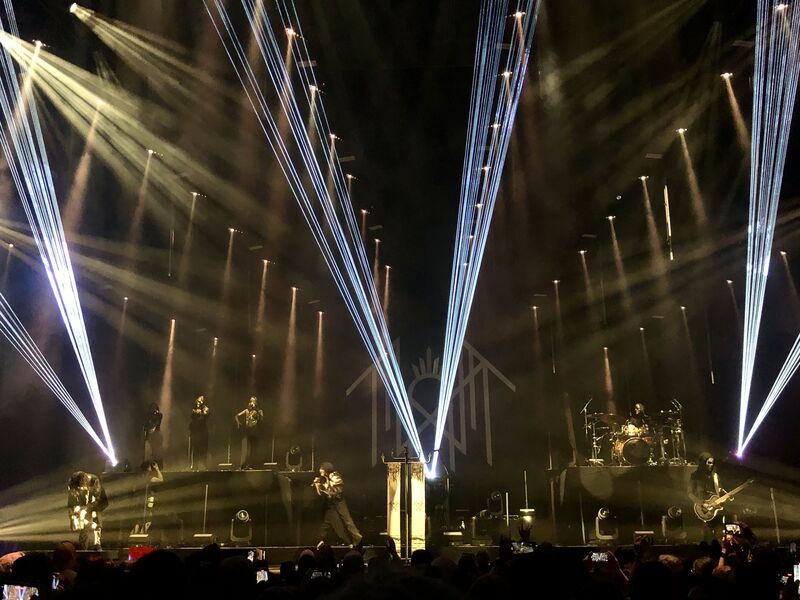
Sleep Token appeared in 2016 with a debut EP called One, and within a few years it had become one of the most talked-about, streamed, and debated projects in modern heavy music. The concept was striking: a band built around the worship of a fictional deity called Sleep, fronted by a vocalist known only as Vessel, with every member masked and anonymous. But the concept would have meant nothing without the music to sustain it, and the music was extraordinary.
What made Sleep Token immediately distinctive was its refusal to choose a lane. A single track might move through R&B-inflected clean vocals, progressive metal complexity, atmospheric electronics, and crushing breakdowns - not as a gimmick but as a natural expression of a songwriter whose influences genuinely spanned all of these worlds. The voice at the centre of it could do everything: featherlight falsetto, full-throated belting, guttural screams, and everything in between — a vocal range analysed in detail here, deployed with an emotional intelligence that made each choice feel inevitable.
Four studio albums - Sundowning (2019), This Place Will Become Your Tomb (2021), Take Me Back to Eden (2023), and Even in Arcadia (2025) - charted a trajectory from underground cult act to Grammy-nominated arena headliner. “The Summoning” became a streaming juggernaut. “Chokehold” crossed over into pop playlists. The band sold out arenas across multiple continents. And through all of it, the masks stayed on.
The full story of Sleep Token is told across several dedicated pages on this site. What matters in the context of Faulkner’s broader musical history is how clearly the earlier projects feed into this one. The emotional directness of Dusk. The ambient patience of that project. The genre-agnostic influences of the YouTube covers. The multi-instrumental proficiency developed across years of solo work. Sleep Token is not a project that came from nowhere. It is a project that came from everywhere - the synthesis of a decade of musical exploration, concentrated into something with the conceptual clarity and artistic conviction to break through on a massive scale.
(Explore Sleep Token in depth: Who Is Leo Faulkner? | Sleep Token Discography | Sleep Token Identity)
Collaborations and Guest Features
Beyond his own projects, Faulkner’s name has surfaced in connection with several other artists in the modern heavy music world. Some of these connections are well-documented; others exist primarily in the realm of fan speculation and circumstantial evidence. The distinction matters, and the following account attempts to be clear about which is which.
Loathe
Loathe - the Liverpool-based post-metalcore band known for their atmospheric, shoegaze-influenced take on heavy music - represent one of the most discussed potential connections to Faulkner. The overlap in sonic territory between Loathe and Sleep Token is significant: both bands blend crushing heaviness with ethereal beauty, both draw on shoegaze and ambient textures, and both emerged from the UK heavy music scene during a similar period.
Fan communities have pointed to vocal similarities on certain Loathe tracks as potential evidence of a guest contribution from Faulkner. The connection, however, remains in the territory of informed fan speculation rather than confirmed collaboration. No official credits have publicly linked Faulkner to Loathe’s recorded output. What can be said with confidence is that the two projects exist within the same artistic ecosystem and share enough aesthetic DNA that the speculation is understandable, even if it remains unverified.
Veil of Maya
Veil of Maya, the Chicago-based progressive metalcore outfit, represents another frequently cited connection. The band’s later material - particularly their work with vocalist Lukas Magyar - moved in a direction that emphasised clean vocals, atmospheric production, and genre-blending ambitions not unlike Sleep Token’s own approach.
Discussions in fan forums have suggested potential vocal contributions or songwriting involvement from Faulkner on certain Veil of Maya tracks. As with Loathe, this remains speculative. The musical affinity between the projects is real, and the modern heavy music scene is small enough that creative cross-pollination between like-minded artists is common. But without confirmed credits, the connection should be treated as plausible rather than established.
Holding Absence
Holding Absence - the post-hardcore band from Cardiff, Wales - sits closer to confirmed territory. The band’s emotionally charged, atmosphere-heavy approach to post-hardcore shares significant common ground with Sleep Token’s lighter moments, and the UK heavy music scene’s tight-knit nature means personal and professional connections between the two camps are well-established.
Frontman Lucas Maybury has spoken publicly about Sleep Token in admiring terms, and the two acts have shared stages and existed within overlapping circles of the UK alternative music community. Whether this extends to direct musical collaboration on recorded material is less clear, but the artistic relationship between the two projects is genuine and acknowledged.
Periphery
Periphery - the Washington, D.C.-based progressive metal band led by Misha Mansoor - represents a connection that operates more at the level of mutual influence and professional respect than direct collaboration. Periphery’s role in popularising progressive metalcore and djent in the 2010s helped create the audience and infrastructure that bands like Sleep Token would later build upon.
Mansoor has been vocal about his appreciation for Sleep Token’s work, and the production sophistication that characterises both projects suggests shared influences and potentially shared professional networks. Periphery’s Horizon studio and Mansoor’s broader production work have touched many corners of the modern metal world, and it would not be surprising if creative paths crossed. However, confirmed direct collaboration between Faulkner and Periphery has not been publicly documented.
Other Rumored Connections
The nature of Sleep Token’s anonymity has created a cottage industry of speculation about Faulkner’s involvement in other musical projects. Fan communities have, at various points, suggested connections to artists ranging from Architects to Spiritbox to various electronic and ambient producers. Most of these theories are built on vocal comparisons, stylistic similarities, or the kind of circumstantial reasoning that the internet excels at constructing.
It is worth noting that this speculation, while often unverifiable, is not entirely baseless in its underlying logic. Faulkner’s BIMM education, his presence in the UK music scene, and the collaborative nature of modern music production mean that his creative fingerprints could plausibly extend beyond the projects that bear his name. Session work, uncredited vocal contributions, songwriting assistance, and production consultation are all common in the industry, and the anonymity that defines Sleep Token makes it particularly difficult to track such contributions if they exist.
The honest assessment is this: Faulkner’s confirmed project history includes Dusk, the pre-Sleep Token project, and Sleep Token. Everything beyond that lives in a space between reasonable inference and wishful thinking, and responsible reporting requires acknowledging the difference.
How Bristol Shaped His Musical Path
No account of Faulkner’s musical development is complete without acknowledging the city that shaped it. Bristol is not merely where he happened to grow up. It is a city with one of the most distinctive musical identities in the United Kingdom, and that identity runs through his work like a watermark.
Bristol gave the world trip-hop - a genre built on atmosphere, texture, and the marriage of electronic production with organic instrumentation. Massive Attack’s Mezzanine, Portishead’s Dummy, Tricky’s Maxinquaye: these were albums that proved music could be simultaneously beautiful and unsettling, that treated genre boundaries as irrelevant. A Massive Attack track might draw on dub reggae, soul, electronic music, and post-punk within a single song, and nobody in the city thought that was unusual.
Growing up in this environment, and then studying at BIMM the city - the area Institute of Modern Music - immersed Faulkner in a culture where genre-fluidity was not a marketing strategy but a default setting. BIMM’s programme emphasises practical musicianship across styles and collaborative work with musicians from different backgrounds. Alumni span pop, rock, electronic, and experimental music. The common thread is not a sound but an attitude: the conviction that musical training should expand possibilities rather than narrow them.
the college also placed Faulkner within a network of ambitious young musicians during a formative period. Music colleges are incubators - places where future collaborators meet and where the seeds of later projects are planted in late-night jam sessions and studio experiments. While the specific connections between Faulkner’s the music college experience and his later career are not publicly detailed, the institution’s role in producing versatile, professionally minded musicians is well-documented.
the region’s broader contribution to his artistic DNA is most audible in Sleep Token’s production choices. The willingness to let songs breathe, to use space and silence as active elements, to build tracks around atmosphere and mood rather than speed and aggression - these instincts feel the cityian in their bones. When Sleep Token’s music enters its quieter passages, the ghost of trip-hop is never far away. It is there in the bass tones, in the reverb tails, in the fundamental belief that music can be heavy without being loud.
Tracing the Artistic Evolution
Step back far enough, and the thread connecting every project becomes visible.
The YouTube covers established the raw materials: a voice with natural range and power, an ear for melody drawn from multiple genres, and the unselfconscious willingness to share work before it was finished. These are the qualities of someone who makes music not because they have decided to pursue a career but because they cannot help it.
Dusk refined those materials into something intentional. The solo project stripped away the covers and forced Faulkner to confront his own songwriting on its own terms. What emerged was a sensibility built on emotional precision - an insistence on finding the exact right note, the exact right word, for each specific feeling. Dusk also established his identity as a multi-instrumentalist, proving that the voice was only one dimension of a broader musical intelligence.
the duo expanded the palette in an entirely different direction. Where Dusk had been direct, the project was oblique. Where Dusk foregrounded the song, the earlier project dissolved it into atmosphere. The ambient collaboration taught lessons about patience, texture, and the power of restraint that a purely song-based project could never have provided. It also introduced the experience of creative partnership - the discipline of shaping music with another person rather than for yourself alone.
Sleep Token synthesised all of it. Dusk’s emotional directness gave the songs their devastating lyrical core. their earlier work’s atmospheric sensibility gave the production its immersive, cinematic quality. The genre-agnostic listening habits revealed in the YouTube covers gave the music its refusal to be categorised. And the multi-instrumental proficiency developed across all previous projects gave the songwriting a harmonic sophistication that most genre-specific artists never achieve.
But Sleep Token also added something none of the earlier projects possessed: a conceptual framework powerful enough to contain all of this diversity. The mythology of Sleep, the anonymity, the ritualistic presentation - these were the architecture that allowed a songwriter to move between pop and metal, between whispered tenderness and screaming catharsis, without the shifts feeling arbitrary. The concept provided unity. The earlier projects provided the vocabulary.
This is not the common narrative of a musician who gradually gets better until they find success. It is the narrative of someone who systematically explored different creative modes - like a painter working through portraiture, landscape, and abstraction - until the moment arrived when all of those modes could be combined into a single, coherent vision. The earlier projects were not failed attempts at what Sleep Token would become. They were essential chapters in the education of someone who needed to understand music from multiple angles before building something that drew on all of them simultaneously.
That trajectory - from bedroom covers to ambient soundscapes to Grammy-nominated arena anthems - is rare in any genre. It suggests not just talent but a particular kind of artistic seriousness: the willingness to spend years developing capabilities with no immediate commercial application, trusting that the eventual synthesis will be worth the investment. For Faulkner, that trust was spectacularly rewarded.
Common Questions About Leo Faulkner’s Music Projects
What bands has Leo Faulkner been in?
Leo Faulkner’s confirmed musical projects include Dusk (a solo project), the ambient duo (an ambient duo with Gemma Matthews), and Sleep Token (his primary ongoing project since 2016). He also produced early cover songs and original material under the YouTube username Monkeyl0rd22. Fan communities have speculated about additional connections to bands like Loathe, Veil of Maya, Holding Absence, and Periphery, but these have not been officially confirmed.
What did Leo Faulkner do before Sleep Token?
Before founding Sleep Token in 2016, Faulkner was active in at least two known projects. Dusk was a solo endeavour featuring atmospheric, emotionally intense songwriting driven by his vocals, piano, and guitar. that project was a collaborative ambient/dream-pop project with Matthews. He also uploaded cover songs and original music to YouTube under the username Monkeyl0rd22 during his teenage years. He studied music at the institution the city, the music college.
Where can I listen to Leo Faulkner’s early music?
Much of Faulkner’s pre-Sleep Token material has become difficult to access. The Monkeyl0rd22 YouTube content has largely been removed or made private. Some Dusk and the pre-Sleep Token project recordings may still be available through music platforms or fan archives, though availability varies. The fan community has periodically surfaced and shared early material, so dedicated searching through Sleep Token fan forums and communities may yield results.
Did Leo Faulkner collaborate with Loathe or Veil of Maya?
These are among the most frequently discussed potential collaborations in Sleep Token fan communities. Vocal similarities and shared aesthetic sensibilities have fueled speculation about guest contributions or songwriting involvement with both bands. However, no confirmed credits have publicly linked Faulkner to either Loathe or Veil of Maya’s recorded output. The connections remain in the realm of fan theory rather than established fact.
What is BIMM Bristol, and how did it shape Faulkner’s music?
the music college (the music college) is one of the UK’s leading contemporary music colleges, offering programmes in performance, songwriting, production, and music business. Faulkner’s time at the institution immersed him in a cross-genre educational environment that emphasised practical musicianship and collaborative work. The institution’s ethos of breaking down genre barriers aligns closely with the genre-fluid approach that defines Sleep Token’s music.
Is Dusk the same as Sleep Token?
No. Dusk was a separate solo project that predated Sleep Token. While both share Faulkner’s vocals and emotional songwriting sensibilities, the projects are distinct in concept, sound, and presentation. Dusk was more stripped-back and personally direct, without the mythology, anonymity, or genre-blending ambition that defines Sleep Token. However, the emotional honesty developed during the Dusk period clearly influenced Sleep Token’s lyrical approach.
How many musical projects has Leo Faulkner been involved in?
Three projects are confirmed through public evidence: Dusk (solo), the duo (duo with Matthews), and Sleep Token (his primary project since 2016), plus early material posted to YouTube under the Monkeyl0rd22 username. Additional collaborations with other artists in the heavy music scene have been widely speculated but not officially confirmed. Given the collaborative nature of modern music production and Faulkner’s anonymity, it is possible that his creative involvement extends beyond these publicly known projects.
Where Things Stand in 2026
Sleep Token remains Faulkner’s primary project and reached new milestones in 2026: two Grammy nominations (Best Metal Performance for “Emergence”, Best Rock Song for “Caramel”), Rock Album of the Year for Even in Arcadia at the iHeartRadio Music Awards, and a Group of the Year nomination at the Brit Awards. No new side project under Faulkner’s name has surfaced; Dusk and Blacklit Canopy remain inactive.
This page is regularly updated as new information becomes available. Last updated: July 2026.
For more on Leo Faulkner, explore our complete guide to who he is, the story of the project, and Sleep Token’s full discography.