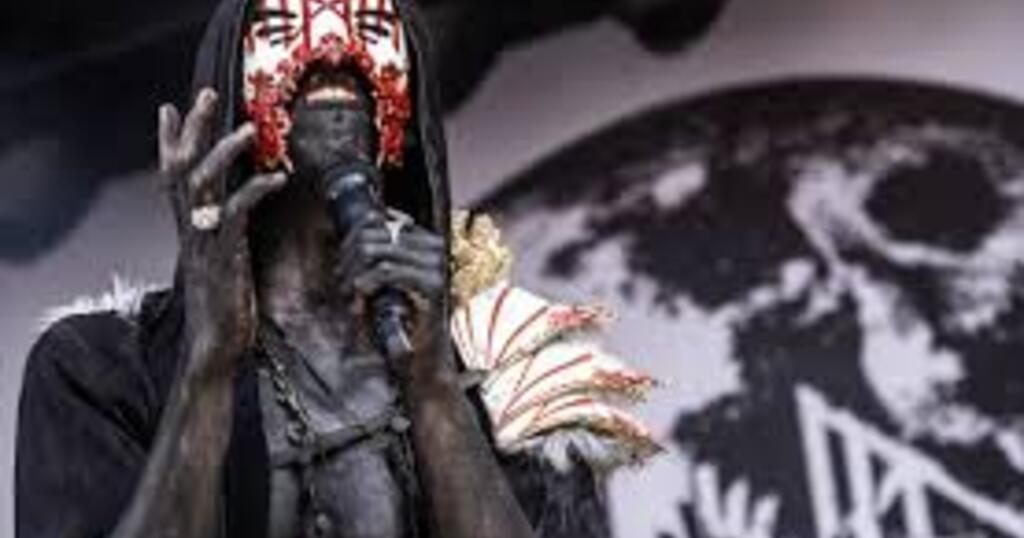
When people talk about Sleep Token, they talk about Vessel. The masked frontman, the extraordinary voice, the songwriter whose identity has fuelled years of speculation and detective work. That focus is understandable. Vessel is the public face – or, more accurately, the public mask – of one of the most compelling projects in modern music.
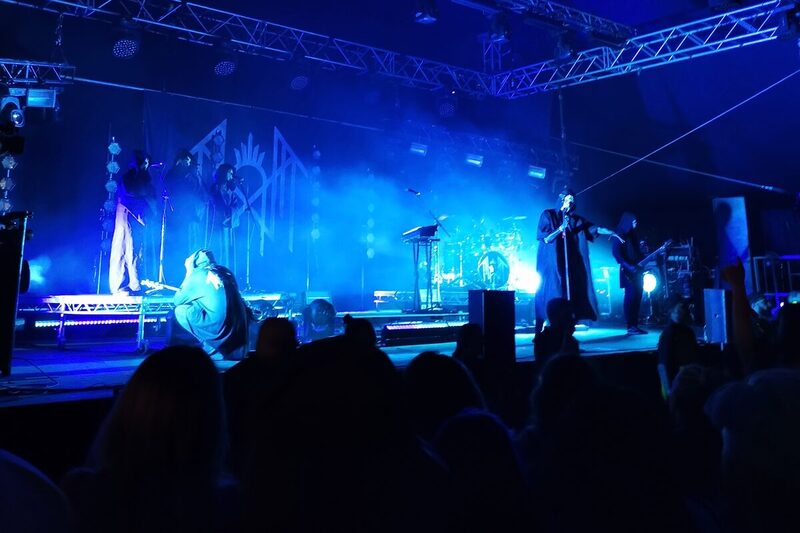
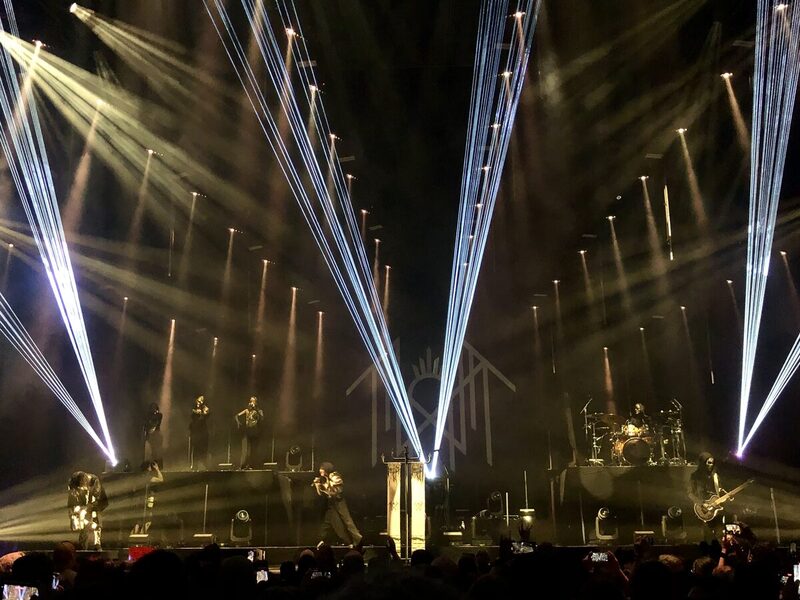
But Sleep Token is not a solo act. Behind every arena-shaking performance, every genre-defying album track, every meticulously constructed live ritual, there is a band. A group of musicians who have committed to the same radical anonymity as their frontman, who perform under Roman numerals instead of names, and who have collectively built the sonic architecture that makes Sleep Token what it is.
The drummer whose polyrhythmic vocabulary draws from gospel, drum and bass, and progressive metal in equal measure. The bassist whose low-end work anchors tracks that shift between genres within bars. The guitarist whose extended-range riffing and textural layering provide the harmonic complexity that sets Sleep Token apart. These are not session musicians filling in gaps. They are essential components of a creative machine that would not function without any one of them.
This page covers what is known, what is reasonably inferred, and what remains genuinely uncertain about the people behind II, III, and IV – as well as past members, backing vocalists, and other names that have surfaced in the conversation about who actually plays in Sleep Token. The same philosophy that guides our coverage of Vessel’s identity applies here: publicly available evidence is presented honestly, with clear distinctions between what is substantiated and what is speculative.
Vessel (I) – Lead Vocals, Piano, Guitar
Vessel is Sleep Token’s creative nucleus. commonly connected to Leo George Faulkner, born December 22, 1993, in Bristol, England, he is the vocalist, primary songwriter, and the figure whose vision shapes every aspect of the project. ASCAP songwriter credits formally link the name Leo Faulkner to Sleep Token’s catalogue, and his musical development can be traced through earlier projects including Dusk and Blacklit Canopy. The evidence connecting Faulkner to Vessel is extensive, widely accepted, and explored in full across our dedicated pages.
For the complete story, see: Who Is Leo Faulkner? and Is Leo Faulkner Vessel?.
This page is about everybody else.
See Vessel's genre-defying vocal performance in "Chokehold":
II – Drums: The Adam Pedder Connection
Of all the non-Vessel members, II has the most documented identity trail. Drumming is inherently difficult to anonymise – style is as distinctive as a fingerprint – and II took the unprecedented step of giving Sleep Token’s first-ever video interview, a landmark sit-down with Drumeo in late 2023.
What Is Known
The name most consistently connected to II is Adam Pedder, a UK-based drummer born on September 17, 1991, in Swindon, Wiltshire. Before Sleep Token, Pedder was active in the British metal and hardcore scenes, playing with bands including She Must Burn, Belial, As Winter Burns White, and Morbid Remains. His presence on the Encyclopaedia Metallum (Metal Archives) and Discogs databases provides a documented trail of his drumming career prior to Sleep Token’s formation.
The connection has been assembled through multiple vectors: overlapping social media connections, tour schedule alignment, and detailed drumming style analysis comparing Pedder’s documented work with other bands to II’s Sleep Token performances.
Crucially, II is credited alongside Vessel as a performer on Sleep Token’s studio albums and has been given songwriting credits – a distinction that separates II from the touring members and suggests deep creative involvement from the project’s inception. If Pedder is indeed II, he is a co-architect of how these songs are built, not merely the person playing the drums.
The Drumeo Interview
The hour-long Drumeo session, conducted masked and in character, was revelatory. II cited the UK dance music scene – particularly drum and bass – as a major rhythmic influence. He described his style as a fusion of Abe Cunningham’s groove-driven approach with linear-style gospel drumming, and named Eric Moore, Tony Royster Jr., Thomas Pridgen, and Joey Jordison as key influences.
Perhaps most interesting was II’s admission that his live drum parts often deviate significantly from the studio recordings – a deliberate artistic choice to keep the material spontaneous rather than a concession to live limitations.
Drumming Style Analysis
The percussion across Sleep Token’s catalogue functions not as time-keeping but as a lead voice. On “The Summoning,” the drums build from minimalist brushwork into thunderous, double-kick-driven passages. On “Chokehold,” the rhythm section channels pop and R&B grooves with genuine conviction. On “Vore,” blast beats and aggressive fills confirm the metal credentials. The ability to navigate all of these contexts within a single song suggests a drummer with unusually broad musical literacy – which aligns with the cross-genre background described in the Drumeo interview and with Pedder’s documented history.
Strength of the Evidence
The Adam Pedder identification is the most widely circulated and least contested of the non-Vessel member identities. It has been discussed openly in fan communities, referenced on fan wiki sites, and has never been contradicted by credible alternative identifications. That said, it remains formally unconfirmed by Sleep Token or their management, and it should be treated accordingly: as the strongest available inference rather than established fact.
Watch II's incredible technical skills in this Drumeo session:
III – Bass
III is Sleep Token’s bassist, and while less publicly discussed than II, the name most frequently connected to the role is Dave Ball, a UK-based musician with roots in the British metal touring circuit.
What Is Known
Before Sleep Token, Ball reportedly toured with established metal acts – most notably Architects, the Brighton-based metalcore band who are one of the biggest names in British heavy music. Touring with a band at that level, even in a support or fill-in capacity, indicates serious professional-grade musicianship and immersion in the UK’s tightly knit heavy music community.
Ball has also been connected to Charvel guitars as a bass endorsee, and live footage from Sleep Token performances has shown III playing Charvel USA Custom Shop and Pro-Mod bass guitars – a consistency that fans have noted as supporting the identification.
Unlike II, who has songwriting credits and album performance credits, III is listed as a touring member. This distinction is significant. It suggests that the bass parts on Sleep Token’s studio recordings may be performed or programmed by Vessel and II, with III bringing those parts to life in the live setting. This is not unusual in projects where the core songwriting duo handles studio recording while a broader band realises the material on stage.
Playing Style and Gear
III’s bass work is deceptively complex, functioning as crucial connective tissue between II’s rhythmic intricacy and IV’s harmonic density. On heavier tracks, III delivers the low-end weight that gives breakdowns their physical impact. On atmospheric material, the bass recedes into textural territory, providing warmth and depth without competing for space.
Gear-wise, III’s live setup centres around the Neural DSP Quad Cortex, with a signal path running through a Lehle P-Split into two Quad Cortex units – one dedicated to sub-bass weight, the other to a cleaner top end. This dual-path approach explains the fullness of the bass sound in the live setting.
Strength of the Evidence
The Dave Ball identification is less extensively documented than the Adam Pedder connection. It circulates widely in fan discussions and has been presented on multiple fan-run information sites, but the direct evidence trail is thinner. There are fewer independently verifiable data points – no equivalent of the Drumeo interview, no Metal Archives profile that can be cross-referenced with the same specificity. The identification should be treated as the prevailing community consensus rather than a near-certainty.
IV – Guitar: Rhys Griffiths and the Continents Connection
IV is Sleep Token’s lead guitarist and backing vocalist, and the name most consistently attached to the role is Rhys Griffiths, a Welsh musician with a documented history in the UK metalcore scene.
What Is Known
Before Sleep Token, Griffiths was a member of Continents, a Welsh metalcore band signed to Victory Records, where he played guitar and contributed vocals from approximately 2013 to 2019. He was also connected to a project called Mourn. The timeline overlaps with Sleep Token’s formation and growth.
One detail that has intrigued fans is that Griffiths reportedly started as Sleep Token’s guitar technician before transitioning into the full-time guitarist role. A tech would already be inside the operational circle, familiar with equipment, setlists, and sonic requirements. Moving from tech to performer would be natural, particularly if the original guitarist departed and a capable replacement was already standing at the side of the stage.
Playing Style and Gear
IV’s guitar work is one of Sleep Token’s most distinctive sonic signatures. The use of extended-range instruments – primarily eight-string guitars – gives the music its characteristic harmonic density. Live footage and tech interviews have revealed an arsenal built around Jackson Soloist Series X eight-strings with EMG 909 pickups, with Aristides multi-scale eight-strings and Balaguer Espada seven-strings rotated in for select material.
Sleep Token employs non-standard tuning that prioritises droning intervals and harmonic weight over traditional chord voicings. IV’s tones run through a Revv Generator head captured into a Neural DSP Quad Cortex, paired with Mesa-style cabinet captures. A Guitar World feature described the approach as centring on long-scale necks, heavy-gauge strings (.084-.010), and a tonal philosophy that prioritises thickness over brightness. These are the choices of someone building atmosphere and weight, not showing off technical speed.
Stage Presence and Vocal Contributions
IV also provides backing vocals during live performances. The Continents background, where Griffiths contributed vocals alongside guitar, makes this dual role consistent with his documented skill set. On stage, IV anchors the performance with a grounded, focused presence – the guitar parts demand intense concentration, and delivering them consistently while masked is a testament to serious professional discipline.
Strength of the Evidence
The Rhys Griffiths identification sits somewhere between the strength of the Adam Pedder connection and the Dave Ball connection. The Continents history is independently verifiable, the timeline is consistent, and the guitar tech-to-guitarist trajectory has been discussed across multiple fan sources. The identification is widely circulated but, like all Sleep Token member identities, remains formally unconfirmed.
Past Members and the Evolving Lineup
Sleep Token’s current touring lineup of Vessel, II, III, and IV is not the same group of people who were on stage in 2016 and 2017. The band has evolved, and understanding that evolution provides important context for how Sleep Token became what it is today.
Jasper Lyons – Early Guitarist
Jasper Lyons is believed to have served as Sleep Token’s lead guitarist from around 2016 to 2020, covering the One and Two EPs and the debut album Sundowning. Very little public information exists about Lyons beyond his association with this period. His departure coincided with the broader lineup shift that produced the current touring band.
Annina Melissa – Original Keyboardist and Backing Vocalist
Annina Melissa served as Sleep Token’s keyboardist and backing vocalist from approximately 2016 to 2020. Her role is now covered through a combination of Vessel’s own playing, backing tracks, and the Espera vocal trio. Melissa was also briefly associated with She Must Burn – connecting back to Adam Pedder, who also played with that band, and suggesting the overlapping musical circles within the UK heavy scene that fed into Sleep Token’s formation.
The departure of both Lyons and Melissa marks the end of Sleep Token’s first era and the beginning of the lineup that carried the band through its mainstream breakthrough.
What the Lineup Changes Tell Us
What is notable is how seamlessly the transitions were managed within the anonymity framework. There are no departure announcements, no “welcome our new guitarist” social media posts. One masked figure is replaced by another, and the project continues. This is both a practical advantage and part of the philosophical point. If Sleep Token is about the music rather than the individuals, then the roles – Vessel, II, III, IV – persist even as the people filling them may change.
Espera – The Backing Vocal Trio
Any account of Sleep Token’s live lineup would be incomplete without mentioning Espera, the trio of backing vocalists who have become an increasingly prominent part of the band’s live performances and sonic identity.
Espera consists of Mathilda Riley, Lynsey Ward, and Paige Lucy Phillips. Previously referred to by fans as “the Vesselettes” – a name the trio reportedly disliked – they now perform under the Espera name and have established their own identity, including performing independent arrangements of other artists’ material.
Their vocal contributions add a dimension to Sleep Token’s live sound that the studio recordings only hint at. The interplay between Vessel’s lead vocals and Espera’s harmonies creates moments of genuine choral beauty, reinforcing the ritualistic, communal quality that distinguishes a Sleep Token show from a conventional concert.
Other Names in the Discussion
The internet’s appetite for identifying Sleep Token’s members has produced names beyond those discussed above. Some represent genuine investigative leads that pointed elsewhere; others are products of misidentification or wishful thinking. They are worth addressing to distinguish them from the more substantiated identifications.
Rob Damiani and the Don Broco Theory
One early theory about Vessel’s identity pointed to Rob Damiani, the vocalist of Don Broco. The theory gained traction on social media in 2023, driven by perceived vocal similarities and the observation that Don Broco and Sleep Token hadn’t appeared to tour simultaneously. It was never substantiated by documentary evidence and faded as the Leo Faulkner identification became widely accepted. It persists as an occasional talking point among newer fans but is not considered credible by the broader community.
Cobus Potgieter
Cobus Potgieter is a South African YouTube drummer with millions of subscribers. His name has appeared in Sleep Token discussions, though the connection is unclear. There is no documented evidence linking Potgieter to Sleep Token in any capacity. The connection likely arises from overlap between online drumming communities, and Potgieter’s established public identity sits awkwardly with the anonymity that Sleep Token requires.
Monkeyl0rd22
Monkeyl0rd22 is a YouTube username connected to the earliest traceable musical experiments of Leo Faulkner, active during what appears to have been his teenage years. It occasionally appears in Sleep Token origin discussions and represents the earliest point in the creative timeline that produced the project. For more detail, see our article on the evidence explained.
Listen to Take Me Back to Eden - the album that showcases every member's contribution:
How Anonymity Works With a Full Band
Keeping one person anonymous is difficult. Keeping an entire band anonymous – across years of touring, recording, interviewing, and navigating the modern music industry – is an extraordinary operational achievement.
The Practical Challenge
Consider what anonymity requires in practice. Every band member must arrive at and depart from venues without being publicly identified. Every industry interaction – from label meetings to equipment endorsements – must respect the framework. Every crew member, sound engineer, and venue employee must either not know or not share the members’ identities.
The fact that Sleep Token has maintained this across nearly a decade, through explosive growth from small venues to arena headliners, is a genuine accomplishment in operational discipline. It requires buy-in from an entire ecosystem of professionals who support the project.
The Mask System
Sleep Token’s masks serve both the philosophical function discussed throughout this site and a purely practical one: they allow the band to perform in front of tens of thousands of people without being visually identified. Each era has seen the masks become more elaborate and more fully concealing. The current designs leave essentially no exposed skin or identifying features visible to audiences, and the lighting design actively supports the anonymity by controlling sight lines and keeping off-stage areas invisible.
What Happens When Members Change
The anonymity framework provides an elegant solution to lineup changes. When a conventional band loses a member, the departure becomes a public narrative that can overshadow the music itself. When Sleep Token changes a member, the mask moves to a new person, and the project continues.
Attentive fans have noted differences in playing style and stage movement that correspond to suspected membership transitions. But these observations remain at the level of fan discussion. The project absorbs the change without breaking character. If Sleep Token’s central idea is that the music transcends the individual people making it, then the replaceability of any given member is not a weakness in the concept – it is a feature.
The Musical Chemistry
Understanding who plays in Sleep Token is one thing. Understanding how they play together is another, and it is arguably more important.
The Live Dynamic
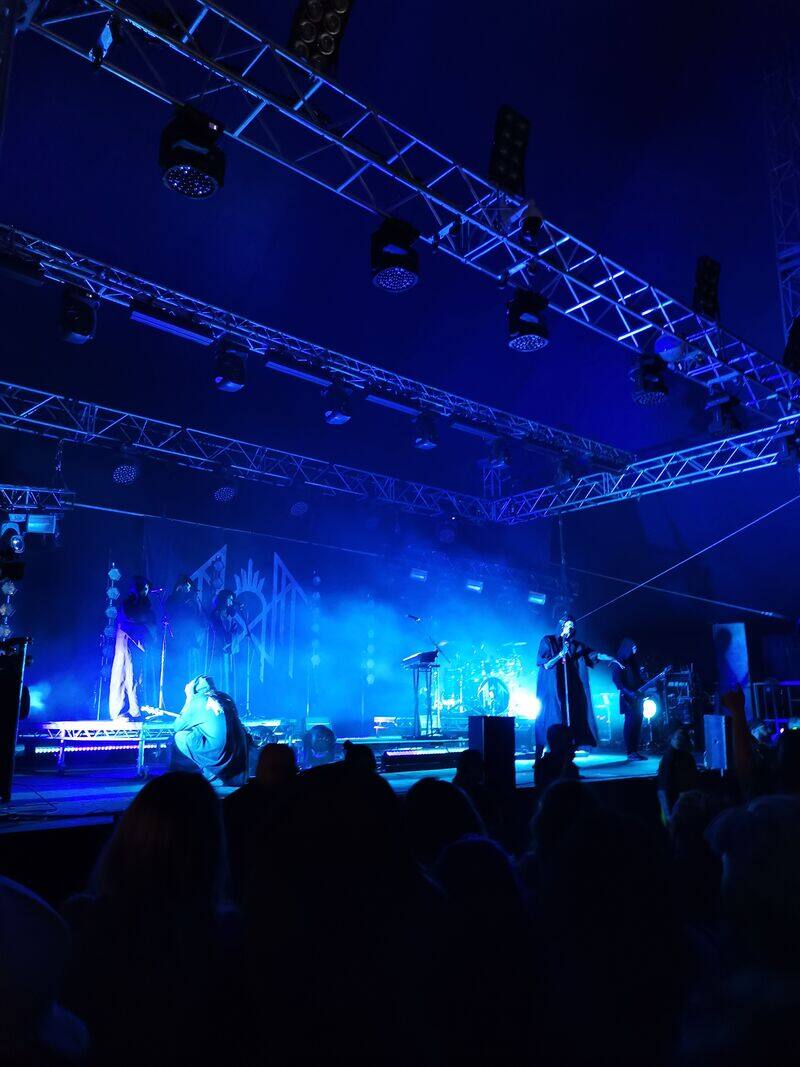
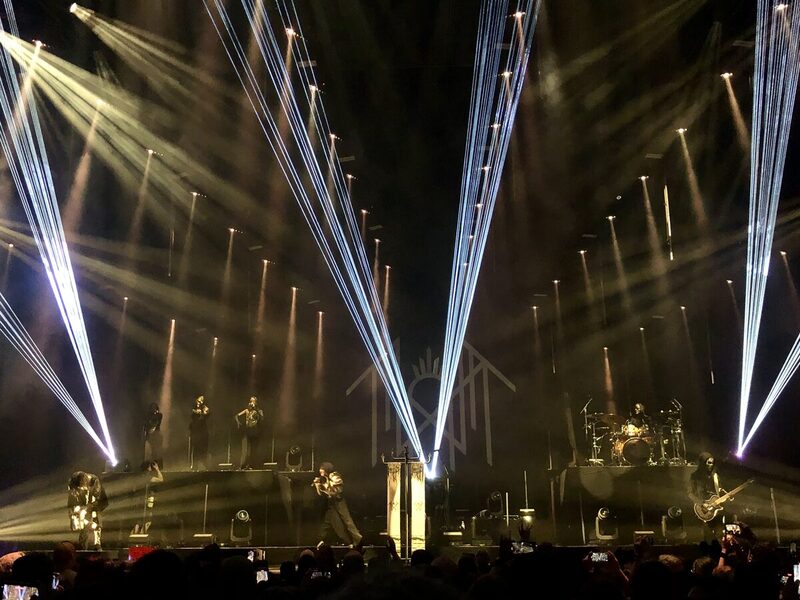
Sleep Token’s live performances are frequently described as transcendent, and the interplay between the musicians is a significant reason why. There is visible, audible communication on stage – moments where II’s drumming locks into IV’s riffing with precision that suggests deep familiarity, passages where III and Vessel breathe together instinctively.
The genre-shifting nature of the music makes this chemistry even more impressive. Moving from a piano-driven verse to a crushing metal breakdown requires every member to make the same dynamic shift simultaneously. The band doesn’t just play the music – they inhabit it collectively.
Studio vs. Stage
As II noted in the Drumeo interview, the live versions of songs often deviate significantly from the recorded arrangements. The live show is treated as its own creative space, with room for improvisation and in-the-moment decisions. This demands a high level of musical trust. When the drummer extends a fill, the bassist follows. When the guitarist reharmonises a passage, the vocalist adapts. This kind of collective musicianship only develops through extensive time playing together and a shared understanding of each song’s emotional intent.
What Makes It Work
Because the band operates within a mythology that frames the music as something larger than any individual, there is a built-in framework for collective surrender. The masks, the anonymity, the ritualistic framing: all of these subordinate individual ego to collective expression. The practical result is a band that sounds like it is serving the song rather than showcasing its members. II’s drumming is spectacular, but it never feels like a drum solo. IV’s guitar work is technically demanding, but it never descends into showing off. III holds everything together without demanding attention. And Vessel’s vocals always feel in service to the emotional narrative rather than to the singer’s own glory.
This is what makes Sleep Token more than the sum of its parts. The chemistry between these musicians – the willingness to serve the collective vision – is what produces the experience that fills arenas.
Sleep Token Band Members FAQ
How many members does Sleep Token have?
Sleep Token has four core masked members: Vessel (lead vocals, piano, guitar), II (drums), III (bass), and IV (guitar and backing vocals). On stage they are joined by Espera, a trio of backing vocalists – Mathilda Riley, Lynsey Ward, and Paige Lucy Phillips – bringing the live lineup to seven performers.
Who is Sleep Token’s drummer?
Sleep Token’s drummer performs as II and is a founding member with songwriting credits alongside Vessel. The name most widely connected to II is Adam Pedder, a UK drummer from Swindon who previously played with She Must Burn and Belial. II gave Sleep Token’s first-ever video interview on Drumeo in late 2023. The identification remains formally unconfirmed.
Who plays bass in Sleep Token?
Sleep Token’s bassist performs as III and is listed as a touring member. The name most commonly associated with III is Dave Ball, who reportedly toured with Architects and other UK metal bands. III plays Charvel bass guitars and uses Neural DSP Quad Cortex modelling in the live setting. Not officially confirmed.
Who is Sleep Token’s guitarist?
The lead guitarist and backing vocalist performs as IV. Fan research connects this role to Rhys Griffiths, a Welsh musician from the metalcore band Continents (2013-2019). Griffiths reportedly moved from guitar tech to full-time guitarist within Sleep Token. IV plays extended-range eight-string guitars with a distinctive atmosphere-heavy tone.
Has Sleep Token’s lineup changed over the years?
Yes. The current touring lineup differs from the original configuration. Notable past members include Jasper Lyons, who served as guitarist from approximately 2016 to 2020, and Annina Melissa, who was the original keyboardist and backing vocalist during the same period. The anonymity framework means that lineup changes do not produce the public announcements or visible disruption that they would in a conventional band.
Who are the backing singers in Sleep Token?
Sleep Token’s backing vocalists are a trio performing under the name Espera, consisting of Mathilda Riley, Lynsey Ward, and Paige Lucy Phillips. Previously referred to informally by fans as “the Vesselettes,” the group now performs under the Espera name. They contribute harmonies and additional vocal layers during live performances, adding a choral dimension that has become an increasingly prominent part of Sleep Token’s live sound.
Is Adam Pedder confirmed as Sleep Token’s drummer?
No formal confirmation exists. The connection between Adam Pedder and II is based on fan research including social media analysis, tour schedule comparisons, drumming style analysis, and his documented history in the UK metal scene. The identification is widely accepted within the fan community and has not been contradicted by credible alternative candidates, but it has not been acknowledged by Sleep Token or their management.
Do the same people always play as II, III, and IV?
Not necessarily. Sleep Token’s lineup has demonstrably changed over its history, with past members including a different guitarist and a keyboardist who are no longer part of the touring band. The anonymity concept theoretically allows for any role to be filled by a different person without public disclosure. That said, the current core of Vessel and II appears to have been stable since the project’s inception, with II holding songwriting credits that indicate a foundational creative partnership.
What other bands have Sleep Token members been in?
Based on fan research: Adam Pedder (linked to II) played with She Must Burn, Belial, As Winter Burns White, and Morbid Remains. Dave Ball (linked to III) reportedly toured with Architects. Rhys Griffiths (linked to IV) was a member of Continents and Mourn. These connections place Sleep Token’s members firmly within the UK heavy music community.
This page is regularly updated as new information becomes available. Last updated: July 2026.
For the full story of Vessel’s identity, see Who Is Leo Faulkner? and Is Leo Faulkner Vessel?. For the visual history of the band’s masked identity, see Leo Faulkner Unmasked.