
Quick Answer
Leo George Faulkner is the musician widely reported to perform as Sleep Token’s Vessel. The band has not officially confirmed that identification. His frequently reported birthday and birthplace have not been established here from primary documents.
Supported by public songwriting registrations that list Leo Faulkner as co-writer of Sleep Token songs (see sources). His documented earlier work includes Blacklit Canopy. Sleep Token began releasing music in 2016.
Leo Faulkner: Key Facts
| Full name | Leo George Faulkner |
|---|---|
| Born | Frequently reported as 22 December 1993; date and birthplace not independently verified here |
| Known as | Vessel, lead vocalist of Sleep Token |
| Education | Reported association with BIMM Bristol; attendance and qualifications not verified here |
| Earlier projects | Monkeyl0rd22 (solo, YouTube), Blacklit Canopy (ambient duo with Gemma Mathews, EP 2014), 2012 Cobus Potgieter YouTube Band Project audition |
| Sleep Token formed | 2016, London |
| Labels | Spinefarm Records (2019–2023); RCA Records (since February 2024) |
| Studio albums | Sundowning (2019), This Place Will Become Your Tomb (2021), Take Me Back to Eden (2023), Even in Arcadia (2025) |
| Career highlights | Even in Arcadia debuted at No. 1 on the Billboard 200 and was certified Gold by the RIAA in January 2026; two Grammy nominations at the 68th Awards; iHeartRadio Rock Album of the Year 2026 |
| Identity evidence | Songwriting registrations naming Leo Faulkner on Sleep Token titles; Blacklit Canopy guitar passage reused in “Damocles”; pre-2016 performance footage |
| Official confirmation | None. Sleep Token has never publicly confirmed any member’s identity. |
There is a particular kind of fame that arrives not through self-promotion but through deliberate erasure. In an era where musicians build personal brands across every conceivable platform, one vocalist chose the opposite path - a balaclava, a mythology built around a fictional deity called “Sleep,” and a strict refusal to acknowledge his own identity. The gamble paid off spectacularly. Sleep Token became one of the most important bands in modern heavy music, and the person widely believed to be its architect - Leo George Faulkner - became one of the most discussed, debated, and dissected figures in the genre.
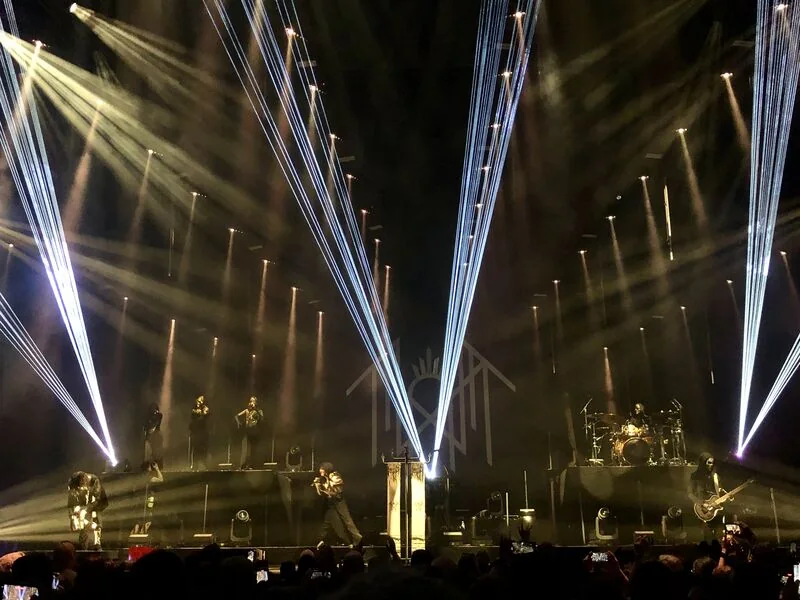
Faulkner’s path from early musical training to sold-out arenas is a story about artistic conviction. It is a story about what happens when someone chooses to let the music speak entirely for itself, even as the internet works overtime to pull back the curtain. For fans who arrived through the haunting balladry of “The Offering” or the crushing weight of “The Summoning,” the question of who is actually singing has always been secondary to how the singing makes them feel. But for those who want to understand the full picture - the training, the earlier projects, the creative philosophy - there is a genuinely fascinating story to tell.
This page sets out what is publicly documented about the person behind Vessel: where he came from, how he developed his craft, what the evidence actually shows, and where Sleep Token stands in 2026. Every factual claim below is either linked to its source inline or listed in the sources section at the end.
Early Life and Education
Leo George Faulkner grew up in a musical environment that nurtured his talents from a young age, developing piano, vocals, and songwriting. He displayed a natural inclination towards music, participating in local bands and solo projects, and in July 2012 he submitted a keyboard audition to the Cobus Potgieter YouTube Band Project - a video that is still online and remains one of the few pieces of unmasked footage of him performing.
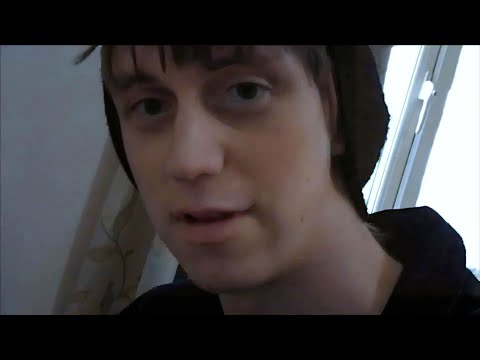
Leo Faulkner’s 2012 keyboard audition video, uploaded to YouTube on 9 July 2012.
Biographical accounts often associate Faulkner with BIMM Bristol, but this page does not have a primary record confirming attendance or qualifications. Blacklit Canopy’s own release page offers a firmer basis for discussing his early musical work.
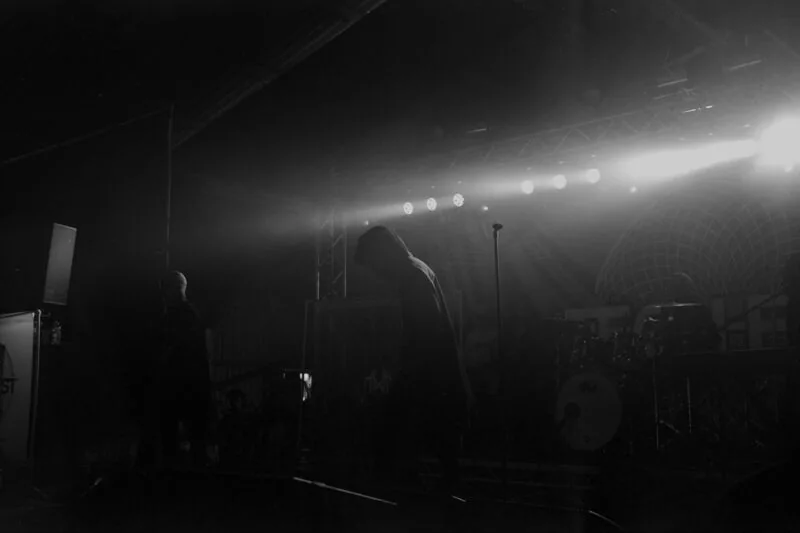
Studying at the college would have immersed Faulkner in an environment where genre boundaries were treated as suggestions rather than rules. The college’s ethos encourages cross-pollination - a guitarist might find themselves collaborating with an electronic producer, a vocalist might explore jazz phrasing alongside metal screaming techniques. This interdisciplinary spirit is audible in everything Sleep Token would eventually become. The band’s ability to pivot from R&B-inflected clean vocals to progressive metal complexity within a single track does not happen by accident. It happens because the person writing the music was trained to think beyond categories, with early interests in acoustic, progressive metal, electronic, and classical music.
Finding His Voice: Early Musical Projects
Before Sleep Token existed, Faulkner was already exploring the boundaries of what his voice and musical vision could achieve through a solo outlet under the YouTube handle Monkeyl0rd22 and an ambient collaboration called Blacklit Canopy. Fans have since collected this material at the independent Leo Faulkner Archive.
Monkeyl0rd22
Under the online alias Monkeyl0rd22, Faulkner shared early music on YouTube, including atmospheric and experimental tracks under project names such as Dusk. This solo outlet offered the earliest publicly available window into his artistic sensibilities - material that, in retrospect, reads as a clear precursor to Sleep Token’s more vulnerable moments. No commercial release like a “Dusk/Dawn CD” ever existed; claims of such are hoaxes.
For fans tracing the creative lineage, these YouTube tracks are essential listening. They reveal the foundation upon which everything else was built: a songwriter drawn to melancholy, unafraid of sincerity, and already in possession of a voice that could shift from whispered intimacy to soaring power.
(For a deeper exploration of this project, see our dedicated page on Monkeyl0rd22.)
Blacklit Canopy
Blacklit Canopy was a different proposition entirely. A collaboration with musician Gemma Mathews, the project occupied ambient and atmospheric territory - more texture than structure, more mood than melody. It released the EP The Patient Demos in 2014, still available on Bandcamp, played a Sofar Sounds session in Winchester on 4 February 2014, and surprised fans with a new single in December 2024 on the duo’s YouTube channel. A guitar passage from their song “Don’t Let The World Swallow You” reappears in Sleep Token’s “Damocles” (around the 1:21 mark) - one of the most-cited pieces of evidence linking the two projects. Faulkner also composed an ambient soundtrack for the short film The Kiss.

“Don’t Let The World Swallow You” by Blacklit Canopy - listen for the guitar figure later reused in “Damocles”.
This collaborative experience matters in understanding Faulkner’s development. Working within an ambient framework requires a fundamentally different set of instincts than writing verse-chorus-verse songs. It demands patience, an ear for sonic detail, and a willingness to serve the overall atmosphere rather than foreground any single element. These are precisely the qualities that would make Sleep Token’s production so distinctive. Tracks like “Atlantic” and “Telomeres” on This Place Will Become Your Tomb carry the DNA of someone who spent time in ambient spaces, who understands how restraint can amplify emotional impact.
(For a deeper exploration of this collaboration, see our dedicated page on Blacklit Canopy.)
Together, these projects represent a formative period - a musician testing different creative modes, building a toolkit that no single genre could contain. When Sleep Token emerged, it did not arrive from nowhere. It arrived from someone who had already spent years figuring out what he wanted to say and how he wanted to say it.
The Birth of Sleep Token
In 2016, something shifted. The solo experiments and ambient collaborations gave way to a project that was at once more ambitious and more mysterious than anything that had come before. Sleep Token appeared in London with little fanfare and no explanation - just music, a striking visual identity, and a mythology centred on worship of a deity called “Sleep.”
The concept was arresting in its totality. This was not a band that happened to wear masks for aesthetic effect. The anonymity was structural, baked into every layer of the project. The vocalist was known only as Vessel. The other musicians were identified by roman numerals. Interviews, when they happened at all, stayed firmly in character. The real names, the personal histories, the faces behind the balaclavas - none of it was officially part of the narrative.
The first material arrived as the One EP in 2016, followed by the Two EP in 2017. Even in these early releases, the scope of the project was evident. Here was music that refused to settle into a single genre lane, drawing from alternative metal, progressive metal, post-rock, indie rock, pop, R&B, and electronic textures with a fluency that suggested deep listening across all of them. The production was polished, the songwriting sophisticated, and the vocals - ranging from featherlight falsetto to guttural screams - were immediately captivating.
What made Sleep Token compelling from the outset was the tension between concealment and emotional exposure. The lyrics were bracingly intimate, dealing in heartbreak, longing, devotion, and existential dread with a directness that most masked artists never attempt. The anonymity did not create distance; paradoxically, it eliminated it. Without a public persona to project onto, listeners were left with nothing but the music and their own emotional response. For many, that proved to be more powerful than any celebrity narrative could provide.
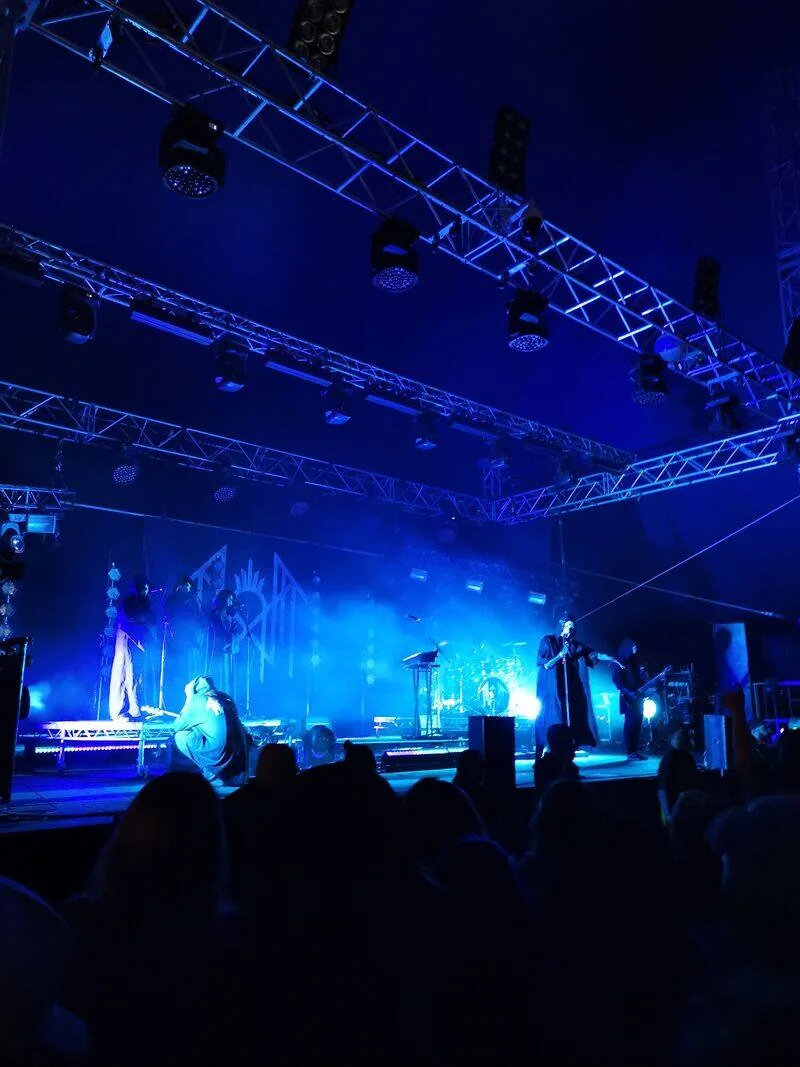
The project’s early growth was organic and largely internet-driven. Word spread through music forums, social media, and the kind of passionate fan-to-fan evangelism that cannot be manufactured. By the time Sleep Token signed to Spinefarm Records (a Universal Music imprint with a strong track record in metal and rock), the groundwork had already been laid by a community of listeners who felt they had discovered something genuinely special.
What the Evidence Actually Shows
Because the band has never confirmed anything, it is worth being precise about what does and does not link Leo Faulkner to Vessel.
- Songwriting registrations. Performing-rights and publishing databases list Leo Faulkner as a writer on Sleep Token songs. The public record for “The Night Does Not Belong to God,” for example, names Adam Pedder and Leo Faulkner as composers, published in part by WC Music Corp. on behalf of “Vessel” (EasySong record; the ASCAP repertory lists him as “Faulkner Leo George”). This is the strongest single piece of evidence: it is a legal document, not fan speculation.
- The “Damocles” sample. A guitar passage from Blacklit Canopy’s “Don’t Let The World Swallow You” is reused in “Damocles” from Even in Arcadia. A songwriter reusing his own earlier material is normal; anyone else doing so without credit would not be.
- Vocal and footage comparisons. Pre-2016 videos of Faulkner performing - the 2012 audition above, Blacklit Canopy’s Sofar session - show a voice with the same timbre and phrasing habits heard on Sleep Token records. This is persuasive to fans but is not proof on its own.
- What is missing. No statement from the band, the label, or Faulkner himself. Sleep Token’s official channels continue to refer to the singer only as Vessel.
For a section-by-section breakdown of each piece of evidence, see Is Leo Faulkner Vessel? Evidence Explained.
Musical Talent and Artistic Range
Discussing the musicianship on display requires setting aside the mystique and focusing purely on craft - and the craft is exceptional.
Vocal Range and Technique
The voice at the centre of Sleep Token is, by any measure, remarkable. Faulkner possesses a range that spans from delicate, breathy passages - the kind of singing that belongs on an R&B record - to full-throated metal screams that can anchor the heaviest breakdowns in the band’s catalogue. More impressive than the range itself is the control and emotional intelligence behind it. This is not a vocalist who screams to prove he can scream or sings softly to prove versatility. Every vocal choice serves the song’s emotional trajectory.
Listen to “The Offering” and you hear a voice that starts in a place of tender, almost fragile devotion before building to a cathartic climax. Listen to “The Summoning” and you hear the same voice navigate a sprawling seven-minute journey through whispered verses, soaring choruses, and crushing heaviness - all with the kind of seamless transitions that make the genre shifts feel inevitable rather than forced. On “Chokehold,” the vocal performance channels pure pop-R&B energy with a conviction that would impress in any genre context. On “Vore,” the screams arrive with a ferocity that earns Sleep Token’s metal credentials beyond any doubt.

“The Summoning” - the track that turned Sleep Token into a streaming phenomenon. Read our analysis of Vessel’s vocal range and technique.
This is not versatility for its own sake. It is versatility in service of storytelling, and the distinction matters enormously.
Piano and Guitar
Beyond vocals, Faulkner is proficient on both piano and guitar - a multi-instrumental capability that informs the band’s songwriting in fundamental ways. A songwriter who can compose at the piano approaches melody and harmony differently than one who works exclusively on guitar. Piano-driven composition tends to open up harmonic possibilities, encouraging chord voicings and progressions that guitar-first writers might never find. This likely accounts for some of Sleep Token’s most distinctive moments: the jazz-inflected chord changes, the unexpected harmonic turns, the passages that feel closer to art-pop than metal.
His guitar work, meanwhile, provides the textural and rhythmic foundation for much of the band’s heavier material. The interplay between these instruments - knowing when a song needs the warmth of a piano and when it needs the weight of distorted guitar - is a core part of what makes the songwriting so dynamic.
Songwriting
Songwriting registrations formally link the name Leo George Faulkner to Sleep Token’s catalogue, providing the clearest public connection between the person and the project. Those records also show that the writing is not a one-man effort: drummer Adam Pedder is co-credited on much of the material, which matches what the band’s own instrumental interplay suggests.
The songwriting is characterised by several distinctive qualities. There is a gift for melody that transcends genre - hooks that lodge in the brain regardless of whether they arrive over blast beats or minimalist piano. There is a structural ambition that allows songs to unfold over extended runtimes without losing momentum. And there is a lyrical voice that manages to be simultaneously personal and mythological, grounding universal emotions in the specific language of Sleep Token’s fictional worship.
Discography and Career Milestones
Sleep Token’s recorded output tells the story of a project in constant evolution - each release expanding the sonic and emotional territory, each one reaching a larger audience than the last.
The Early EPs: One (2016) and Two (2017)
The One and Two EPs served as Sleep Token’s introduction to the world. Released independently before the band secured a label deal, these collections established the project’s core identity: genre-fluid songwriting wrapped in striking visual presentation and anchored by an extraordinary vocal performance. From the first note, the project knew what it was.
Sundowning (2019)
The debut full-length album was the moment Sleep Token graduated from underground curiosity to critical darling. Released through Spinefarm Records, Sundowning is a sprawling, emotionally overwhelming record that moves from ethereal ambient passages to crushing metal with a fluency that caught the wider music press off guard. Tracks like “The Offering,” “The Night Does Not Belong to God,” and “Calcutta” showcased the full breadth of the project’s ambitions. Revolver’s retrospective on the album is the best long-form account of that period.
This Place Will Become Your Tomb (2021)
The second album pushed further into atmospheric and electronic territory, expanding the band’s sonic palette while maintaining the emotional intensity that defined the debut. This Place Will Become Your Tomb was a more patient, more layered record - one that rewarded close listening and repeated plays. Tracks like “Atlantic” and “Telomeres” demonstrated a willingness to slow down, to let songs breathe, to trust that the audience would follow into quieter, more introspective spaces.
Take Me Back to Eden (2023)
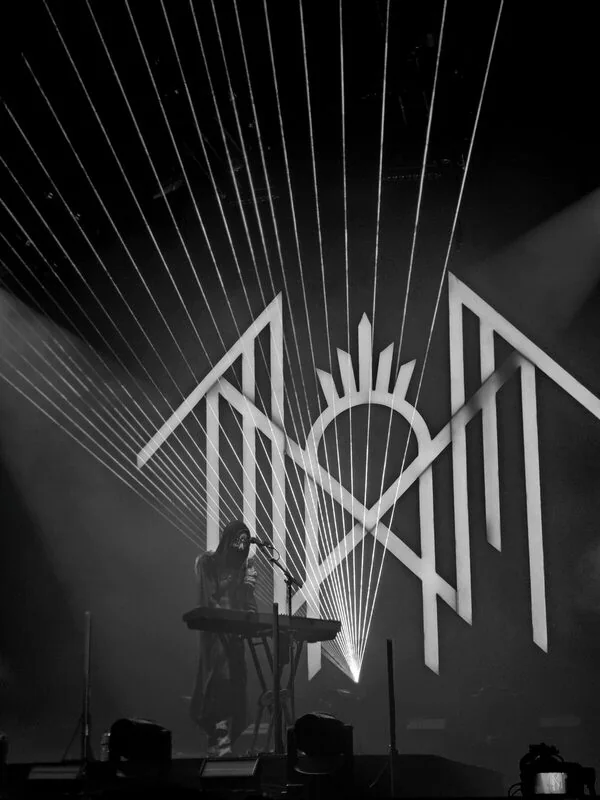
If the first two albums established Sleep Token’s credentials, Take Me Back to Eden was the record that turned them into a phenomenon. “The Summoning” became a genuine streaming juggernaut, “Chokehold” crossed over into pop and R&B playlists, and “Vore” satisfied the audience’s appetite for sheer heaviness. The album won Best Album at the 2024 Heavy Music Awards and Top Hard Rock Album at the 2024 Billboard Music Awards, and in March 2026 Metal Hammer ranked it the fourth-best metal album of the decade so far. The band graduated to arena-level venues, including a headline show at London’s Wembley Arena.
Even in Arcadia (2025)
The fourth album - the first under the band’s RCA Records deal announced in February 2024 - was released on 9 May 2025. Even in Arcadia, its title a reference to the Latin phrase Et in Arcadia ego, debuted at No. 1 on the Billboard 200 and was certified Gold by the RIAA in January 2026. Its lead single “Emergence” and the track “Caramel” earned the band’s first two Grammy nominations, and the New York Times named “Caramel” the best song of 2025.
With each release, the discography has charted a clear arc: from promising underground debut to one of the defining musical projects of the 2020s. See the complete Sleep Token discography for every release.
Sleep Token in 2026: Where Things Stand
The Even in Arcadia cycle carried into 2026 with the band’s biggest run of industry recognition to date. In order:
- December 2025 - Even in Arcadia named Album of the Year by both the Revolver Awards and the Nocturnal Awards, where Vessel was also named Masked Musician of the Year.
- 28 January 2026 - Even in Arcadia certified Gold in the United States (500,000 units).
- 1 February 2026 - 68th Grammy Awards. Sleep Token were nominated for Best Metal Performance (“Emergence”) and Best Rock Song (“Caramel”) but did not win either. Drummer II did take home a Grammy: the supergroup performance of Black Sabbath’s “Changes” at the Back to the Beginning farewell show, on which he played, won Best Rock Performance.
- 28 February 2026 - nominated for Group of the Year at the Brit Awards.
- 26 March 2026 - Even in Arcadia won Rock Album of the Year at the iHeartRadio Music Awards.
- April 2026 - three American Music Awards nominations: Best Rock/Alternative Artist, Best Rock/Alternative Album, and Breakout Tour for the 2025 US arena run.
- August 2026 - bassist III and guitarist IV launched signature instruments with Jackson and Charvel, the first official gear tie-ins for the masked members.
Vessel himself has, as ever, said nothing on the record. There has been no unmasking, no interview under his real name, and no official new album announcement as of September 2026. Current tour dates are listed on the band’s official site; our own tour guide tracks what is confirmed. For the latest, see Leo Faulkner now.
The Philosophy of Anonymity
The masked persona is not a gimmick. Understanding this is essential to understanding everything Sleep Token has achieved.
In an industry that increasingly treats musicians as content creators - personalities first, artists second - the decision to remove personality from the equation entirely was radical. Vessel wears a balaclava. He does not do unmasked interviews. He does not post personal content on social media. He has constructed, with remarkable discipline, a creative project in which the art is the only point of contact between artist and audience.
This approach has precedents, of course. Daft Punk’s helmets, Slipknot’s masks, MF DOOM’s metal face - the history of popular music is dotted with artists who understood that concealment could be its own form of expression. But Sleep Token’s anonymity operates differently from most of these examples. It is not theatrical costuming or brand identity. It is a philosophical position about the relationship between artist and listener.
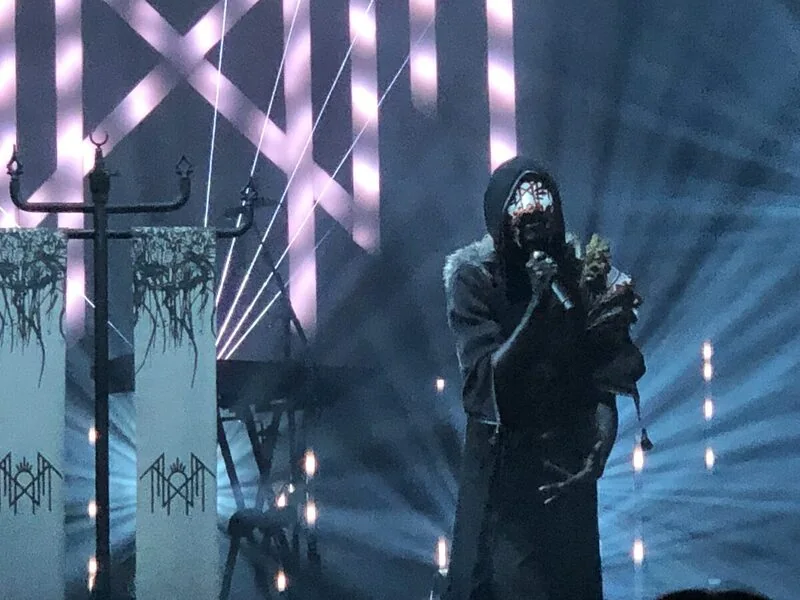
By removing the artist’s face, biography, and personal narrative from the equation, Sleep Token forces a different kind of engagement. There is no parasocial relationship to develop with a person who does not publicly exist as a person. There is no celebrity gossip, no paparazzi photos, no social media controversies. There is only the music and the mythology. For listeners, this creates a space of unusual intimacy. The songs become mirrors rather than windows - listeners project their own experiences onto the music rather than interpreting it through the lens of the artist’s known biography.
The irony, of course, is that the anonymity has generated more curiosity about the person behind the mask than a conventional public presence ever would. The internet’s efforts to identify Vessel - the detective work, the songwriting credits, the comparisons to earlier projects like Blacklit Canopy and Monkeyl0rd22 - have become their own subculture, centred on communities such as r/SleepTokenTheory. Faulkner’s name is widely circulated, and the connection between the person and the project is, at this point, an open secret rather than a genuine mystery.
But the persistence of the masked persona even after the widespread identification speaks to something important about the project’s values. The anonymity was never primarily about keeping a secret. It was about establishing a framework in which the music could exist on its own terms. Even now, when most engaged fans know or believe they know who Vessel is, the mask continues to serve its function. It signals that Sleep Token is not about celebrity. It is about devotion - to the craft, to the emotional truth of the songs, and to the fictional mythology that gives the project its unique character.
Impact on Modern Music
Sleep Token did not merely succeed within the existing landscape of heavy music. They altered the landscape itself.
Redefining Genre Boundaries
Before Sleep Token, the idea that a metal band could incorporate R&B vocals, trip-hop atmospherics, and pop songwriting without being dismissed as novelty was, at best, a tough sell. Sleep Token made the crossover work - not by compromising in any direction but by executing every genre element at such a high level that dismissal became impossible. Their success gave permission to a generation of heavy music artists to expand their sonic vocabulary. Sleep Token did not invent genre-blending in metal - acts like Deftones, Leprous, and TesseracT had explored similar territory, as Metal Hammer has traced - but they proved it could be commercially massive in the streaming era.
The Streaming Era’s First Metal Phenomenon
Sleep Token’s rise coincided with, and was enabled by, the streaming economy’s transformation of how music is discovered and consumed. A track like “The Summoning” could appear on a metal playlist, a singer-songwriter playlist, and an ambient study playlist without feeling out of place on any of them. More importantly, Sleep Token demonstrated that heavy music could compete in the streaming landscape on its own terms - not by softening its sound but by making music so compelling that listeners from outside the metal world were drawn in.
Cultural Resonance
Beyond the music itself, Sleep Token tapped into something in the cultural moment that proved deeply resonant. The themes of worship, devotion, and surrender - filtered through the band’s fictional mythology - spoke to audiences navigating an era of widespread disillusionment and search for meaning. The visual identity - the masks, the ritualistic stage presentation - offered fans a sense of participation in something larger than a typical band-audience relationship. Sleep Token shows feel less like concerts and more like communal experiences, a quality that fostered one of the most passionate fanbases in modern music. See our guide to Sleep Token’s lore for the mythology itself.
Leo Faulkner FAQ
Is Leo Faulkner really Vessel from Sleep Token?
Sleep Token has never officially confirmed the identity of any member, but the public record is hard to argue with. Songwriting registrations name Leo Faulkner as a writer on Sleep Token titles, a guitar passage from his Blacklit Canopy song “Don’t Let The World Swallow You” appears in “Damocles,” and pre-2016 performance footage matches the voice on the records. Within the fan community and music press, the connection is widely accepted, though unconfirmed by the band.
Did Sleep Token win a Grammy in 2026?
Not as a band. Sleep Token were nominated at the 68th Grammy Awards in February 2026 for Best Metal Performance (“Emergence”) and Best Rock Song (“Caramel”) and lost both. Drummer II did win Best Rock Performance as part of the supergroup that performed “Changes” at Black Sabbath’s farewell concert in July 2025.
Where is Leo Faulkner from?
Faulkner was born in 1993 in the United Kingdom and studied at BIMM in Bristol, one of the UK’s leading contemporary music colleges. The city’s rich musical heritage - particularly its history of atmospheric, genre-defying music - is often cited as a likely influence on his artistic development.
What instruments does the Sleep Token vocalist play?
Beyond his wide-ranging vocal abilities - which span from soft, R&B-influenced clean singing to powerful metal screams - Faulkner is proficient on both piano and guitar. His earliest public footage is a keyboard audition, and Sleep Token’s songwriting draws on harmonic approaches associated with keyboard-based composition alongside riff-driven guitar writing.
Why does Vessel wear a mask?
The masked anonymity is a deliberate artistic choice central to Sleep Token’s identity and philosophy. By removing personal identity from the project, the band shifts all attention onto the music, lyrics, and mythology. The anonymity has been maintained consistently since 2016, even as the vocalist’s likely identity has become widely known.
What was Leo Faulkner’s first band?
Before Sleep Token, Faulkner released solo material on YouTube as Monkeyl0rd22, auditioned on keyboards for the 2012 Cobus Potgieter YouTube Band Project, and formed the ambient duo Blacklit Canopy with Gemma Mathews, which released an EP in 2014 and a surprise single in December 2024.
How many albums has Sleep Token released?
Four full-length studio albums - Sundowning (2019), This Place Will Become Your Tomb (2021), Take Me Back to Eden (2023), and Even in Arcadia (2025) - preceded by the EPs One (2016) and Two (2017).
Not the Actor
A common source of confusion in search results: the Leo Faulkner discussed on this site is a musician, not an actor. There is an IMDb entry under the name Leo Faulkner, but it belongs to a different person with no connection to Sleep Token. Searches for “Leo Faulkner actor” or “Leo Faulkner movies” stem from that name overlap.
Leo George Faulkner’s creative output is entirely within music - from the ambient duo through to Sleep Token. If you are looking for an actor by a similar name, that is a different person entirely.
Sources
- ASCAP Repertory, writer entry “Faulkner Leo George” - ascap.com/repertory
- EasySong copyright record, “The Night Does Not Belong to God” (composers Adam Pedder and Leo Faulkner) - easysong.com
- Leo Faulkner, keyboard audition for the Cobus Potgieter YouTube Band Project, 9 July 2012 - YouTube
- Blacklit Canopy, The Patient Demos (2014) - Bandcamp
- “Sleep Token sign new record deal with RCA”, NME, 14 February 2024 - nme.com
- “Sleep Token’s Even in Arcadia Certified Gold in the United States”, Consequence, 28 January 2026 - consequence.net
- Sleep Token artist page, Recording Academy - grammy.com
- “Yungblud Wins Best Rock Performance for ‘Changes’ at 2026 Grammys”, Pitchfork, 1 February 2026 - pitchfork.com
- “All the winners at the 2026 Brit Awards”, BBC News, 28 February 2026 - bbc.com
- “Here Are the 2026 iHeartRadio Music Awards Winners”, Billboard, 26 March 2026 - billboard.com
- “The 30 best metal albums of the decade (so far)”, Metal Hammer, 24 March 2026 - loudersound.com
- “A Sleep Token Song is No. 1 on New York Times Best Songs of 2025 List”, Loudwire, 9 December 2025 - loudwire.com
- “The story behind Sleep Token’s beloved debut album Sundowning”, Revolver - revolvermag.com
- Sleep Token, Wikipedia (awards table and 2026 timeline, with primary citations) - en.wikipedia.org
This page is reviewed and updated as new information becomes available. Last updated: 8 September 2026. Corrections: see our editorial policy or contact us.
Leo Faulkner’s story is also explored across our dedicated pages on his early musical projects, Blacklit Canopy, the Leo Faulkner timeline, and Sleep Token’s complete discography.