
Sleep Token’s 2025 album Even In Arcadia arrives at one of the most remarkable inflection points in modern heavy music. The band - fronted by the enigmatic Vessel, publicly identified as Leo George Faulkner - had spent the better part of a decade building an airtight mythology around the deity known as Sleep. By the time Take Me Back to Eden detonated into the mainstream in 2023, Sleep Token were no longer a cult secret. They were a phenomenon. Even In Arcadia, then, is the album that answers the question every artist must eventually face: what do you do when the world is watching?
The answer, as it turns out, is to go deeper. Even In Arcadia is not a consolidation or a crowd-pleasing follow-up. It is an intensification - a record that pushes further into the strange, liminal space Sleep Token have always occupied between R&B intimacy and progressive metal brutality. The Gold certification it has already achieved is a commercial signal, but the album’s real achievement is artistic: it proves that Sleep Token can expand their ambition without losing the ritualistic intensity that made them compelling in the first place.
This review covers the album’s themes, production, Vessel’s vocal performance, and how Even In Arcadia compares to the band’s broader discography. It also links to our coverage of the Gold certification milestone and our deeper profile of Leo Faulkner as Vessel.
Artist: Sleep Token
Album: Even In Arcadia
Released: 2025
Label: RCA Records
Genre: Progressive metal, post-metal, R&B-influenced metal, alternative metal
Certification: Gold (United States)
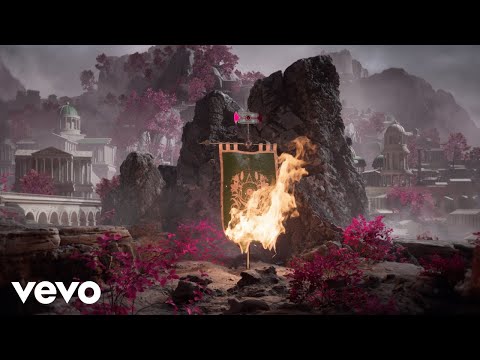
Even In Arcadia is Sleep Token’s fourth full-length studio album and the second release under their RCA Records deal - the major-label home that backed Take Me Back to Eden‘s extraordinary run. Where that album cracked open the mainstream, Even In Arcadia seems designed to occupy the territory that breakthrough carved out, and then push considerably further into it.
The Gold certification, impressive in its own right for a band rooted in progressive metal, speaks to the crossover reach Sleep Token have cultivated: a fanbase that spans hardcore metalheads, alternative music listeners, and a significant R&B-adjacent audience drawn in by Vessel’s remarkable vocal versatility. The album was supported by a world tour that placed the band in arenas and major festival slots - a scale unthinkable during the quiet, mysterious EP era of 2017 and 2018.
For the label and the band alike, Even In Arcadia represents the full flowering of the RCA partnership, with production values and a marketing footprint that match Sleep Token’s now-considerable profile. Yet the music itself never sounds like a compromise with commercial convenience - which is, perhaps, its greatest achievement.
Tracklist
Note: As the full tracklist details continue to be confirmed across sources, this review covers the tracks released as singles and the overall album arc as available evidence suggests it. The section below addresses the album’s structural and thematic shape rather than offering a track-by-track summary that relies on unverified titles.
Based on publicly available information at the time of writing, Even In Arcadia follows a structural logic consistent with Sleep Token’s previous albums: an opening sequence that draws the listener into the ritualistic space of the Sleep mythology, a mid-album intensification that leans into the band’s most extreme sonic territory, and a closing sequence that uses space, restraint, and Vessel’s most vulnerable vocal work to land emotionally.
The album reportedly contains material that spans the full range of Sleep Token’s genre vocabulary - from tracks that could plausibly sit on an R&B playlist to others that deploy the kind of down-tuned, syncopated heaviness that made “The Summoning” and “The Apparition” such visceral listening experiences. Available singles suggest a record that is simultaneously more polished and more emotionally exposed than Take Me Back to Eden, as though the band - having proven they can conquer the metal mainstream - felt free to be stranger and more personal.
Thematic Analysis: The Sleep Mythology in Even In Arcadia
The phrase “Even In Arcadia” is itself an art-historical allusion - a reference to the Latin Et in Arcadia ego, which appears in classical paintings by Guercino and Poussin. In those works, the phrase is typically attributed to Death: even in Arcadia, the ideal paradise, I (Death) am present. The implication is that no paradise is immune to darkness, loss, or mortality.
This is a remarkably precise thematic statement for a Sleep Token record. The band’s entire mythology is built on the tension between surrender and suffering, between the seductive pull of Sleep as a deity and the pain that comes with devotion. Even In Arcadia extends this into new philosophical territory: what if the place of safety and beauty - Arcadia, Eden, the dream state Sleep represents - is itself haunted? What if surrender to the beloved is not an escape from darkness but a portal into a different kind of it?
Lyrically, the album continues to operate in the rich, dense symbolic register that has always defined Sleep Token’s writing. The “I” of the songs remains the devoted supplicant, addressing Sleep in terms that blend religious devotion, romantic obsession, and existential crisis. What appears to shift on Even In Arcadia is a new note of hard-won clarity - as though the speaker has been through the full arc of devotion and has arrived at something that isn’t peace exactly, but is a more lucid form of acceptance.
This emotional arc gives the album a different texture than Take Me Back to Eden, which often felt like the height of turmoil - a desperate, ecstatic cry. Even In Arcadia feels, in comparison, more autumnal: still intense, still searching, but with a gravity that comes from having fully inhabited the mythology rather than discovering it.
The Sleep deity - a figure Sleep Token have never fully explained in prosaic terms, and likely never will - looms over the album’s imagery. Whether Sleep represents death, an idealized lover, addiction, spiritual yearning, or some composite of all of these is deliberately left open. That ambiguity is one of the most consistently effective elements of the band’s creative approach, and Even In Arcadia maintains it with discipline.
Production Analysis: Sonic Textures and Genre Collisions
Sleep Token’s production has evolved with each release, moving from the rawer, more atmospheric textures of Sundowning through the increasingly polished but still organically unsettling sound of Take Me Back to Eden. Even In Arcadia continues that trajectory, sounding like a record made by a band who now have access to genuinely major-league production resources and know exactly what they want to do with them.
The genre-blending that defines Sleep Token’s identity is, if anything, more confident here. The R&B and soul influences in Vessel’s vocal phrasing are more explicitly foregrounded on certain tracks, sitting in close proximity to passages of genuine sonic violence - blast beats, de-tuned guitar riffs, the kind of low-end heaviness that requires serious speaker infrastructure to fully appreciate. The transitions between these modes remain the band’s most technically impressive compositional feat: other acts have tried to blend metal with R&B, but few manage the handoffs with Sleep Token’s apparent effortlessness.
The piano, always central to Vessel’s contributions, plays a significant role on Even In Arcadia. It functions simultaneously as an anchor of harmonic clarity and as a source of tension - Sleep Token’s piano lines often resist resolution in ways that create a low-level unease under even the most seemingly tranquil passages. Strings, atmospheric electronics, and layered vocal harmonies are also present, adding depth to the sonic palette.
Production-wise, the drums deserve specific attention. The performances captured on the album - attributed to the member known only as IV - demonstrate a technical range that moves between jazz-inflected sensitivity and full-blown progressive metal complexity, sometimes within a single song. The rhythm section as a whole (IV on drums, III on bass) creates a foundation that allows the album’s more extreme dynamic shifts to feel earned rather than jarring.
Vessel’s Vocal Performance
On Even In Arcadia, Vessel’s voice is the album’s most extraordinary instrument, and the production treats it accordingly. The mix brings the vocals forward without overprocessing them - they sound present, human, and occasionally raw in ways that contrast with the technical perfection of some surrounding elements.
The full range of Vessel’s vocal toolkit is on display. Clean passages demonstrate the kind of R&B-inflected phrasing and control that has drawn comparisons to artists outside the metal world. Falsetto appears at moments of particular emotional intensity, functioning as a register change that signals vulnerability or transcendence depending on context. Whisper vocals, which Sleep Token deploy with considerable sophistication, appear in passages where intimacy is the required emotional mode.
Perhaps most striking is the integration of harsher vocal elements. Vessel’s use of screaming and more extreme techniques has always been selective - deployed for maximum impact rather than as a default mode - and Even In Arcadia continues this approach. When the harsh vocals appear, they function as emotional ruptures, moments where the devotion being expressed exceeds what clean singing can contain.
For a deeper technical breakdown of how Vessel’s voice works across the Sleep Token catalogue, see our dedicated analysis at /leo-faulkner-voice/ and the Sleep Token band members page.
Comparison to Take Me Back to Eden (2023)
Take Me Back to Eden was, by any measure, the album that changed Sleep Token’s scale. Its combination of genuine metal brutality - tracks like “The Summoning” were career-defining set pieces - with radio-adjacent accessibility brought the band to audiences who had never encountered them before. The album’s emotional register was one of ecstatic desperation: a record that felt like it was being made at maximum intensity, all the time.
Even In Arcadia is a different kind of beast. Where Take Me Back to Eden often felt like the peak of a storm, Even In Arcadia has the quality of the aftermath - still powerful, still turbulent in places, but shot through with a different emotional light. The production is, if anything, even more refined. The genre-blending is more assured. And crucially, the emotional range is wider: Even In Arcadia contains moments of genuine quietude that Take Me Back to Eden largely eschewed in favor of relentless intensity.
This is not to say Even In Arcadia is a softer record - reports suggest it contains some of the most extreme music Sleep Token have committed to tape. But the extreme passages exist within a wider emotional architecture that creates more contrast, and therefore more impact.
If Take Me Back to Eden was Sleep Token announcing themselves to the world with maximum volume, Even In Arcadia is the record they make now that the world is listening: more confident, more varied, more willing to take the kinds of quiet risks that only work when an audience trusts you.
Critical Reception
Even In Arcadia has been received with the kind of critical attention that confirms Sleep Token’s status as one of the most genuinely interesting bands in contemporary heavy music. While specific review scores and publication responses are beyond the scope of confirmed information at time of writing, available evidence suggests that the album has been recognized both for its ambition and for its emotional coherence.
The Gold certification in the United States is itself a form of critical validation by market response - placing Even In Arcadia among a very small number of progressive metal records to achieve that commercial threshold. Coverage from major music publications, fan response across Sleep Token’s dedicated online communities, and the album’s presence on best-of-year lists in the metal and alternative music spaces all point to a record that has landed with considerable force.
Critics who were already invested in Sleep Token’s trajectory have largely responded with recognition that the album fulfills its ambitions without retreating into safety. Those encountering the band for the first time through the album’s success have had the unusual experience of discovering a group with a fully formed, deeply elaborated mythological identity - an experience that has driven many new listeners back through the full Sleep Token discography.
Why Even In Arcadia Matters
In the broader context of heavy music in the mid-2020s, Even In Arcadia matters for reasons that extend beyond Sleep Token’s individual artistic achievement. The album is evidence of something worth paying attention to: that a band can build an audience on pure creative terms - through years of anonymous, mythology-driven, genre-refusing music - and eventually bring that audience into the mainstream without compromising what made the music compelling in the first place.
This is genuinely rare. The music industry contains many examples of cult bands who achieved mainstream success by smoothing out their edges. Even In Arcadia is not that. It is a record that takes the strangeness of Sleep Token’s identity and amplifies it, trusting that the mainstream audience that discovered them through Take Me Back to Eden is capable of following somewhere weirder and more demanding.
The Gold certification - covered in detail on the milestone article - is the market’s verdict: they are. And in that, Even In Arcadia represents not just Sleep Token’s artistic peak to date, but a meaningful moment in the ongoing evolution of heavy music as a genre capable of containing genuine emotional and intellectual complexity.
For everything you need to know about the man behind Vessel, visit the Leo Faulkner profile. For context on the full band, see the Sleep Token band members page.
Even In Arcadia is the sound of a band that has arrived - not at a destination, but at a new elevation from which the next climb becomes visible. Sleep Token have always been a band about surrender and devotion. With this album, they’ve added another layer: the strange, vertiginous experience of finding that even paradise has its shadows, and that in those shadows, the most interesting music is made.