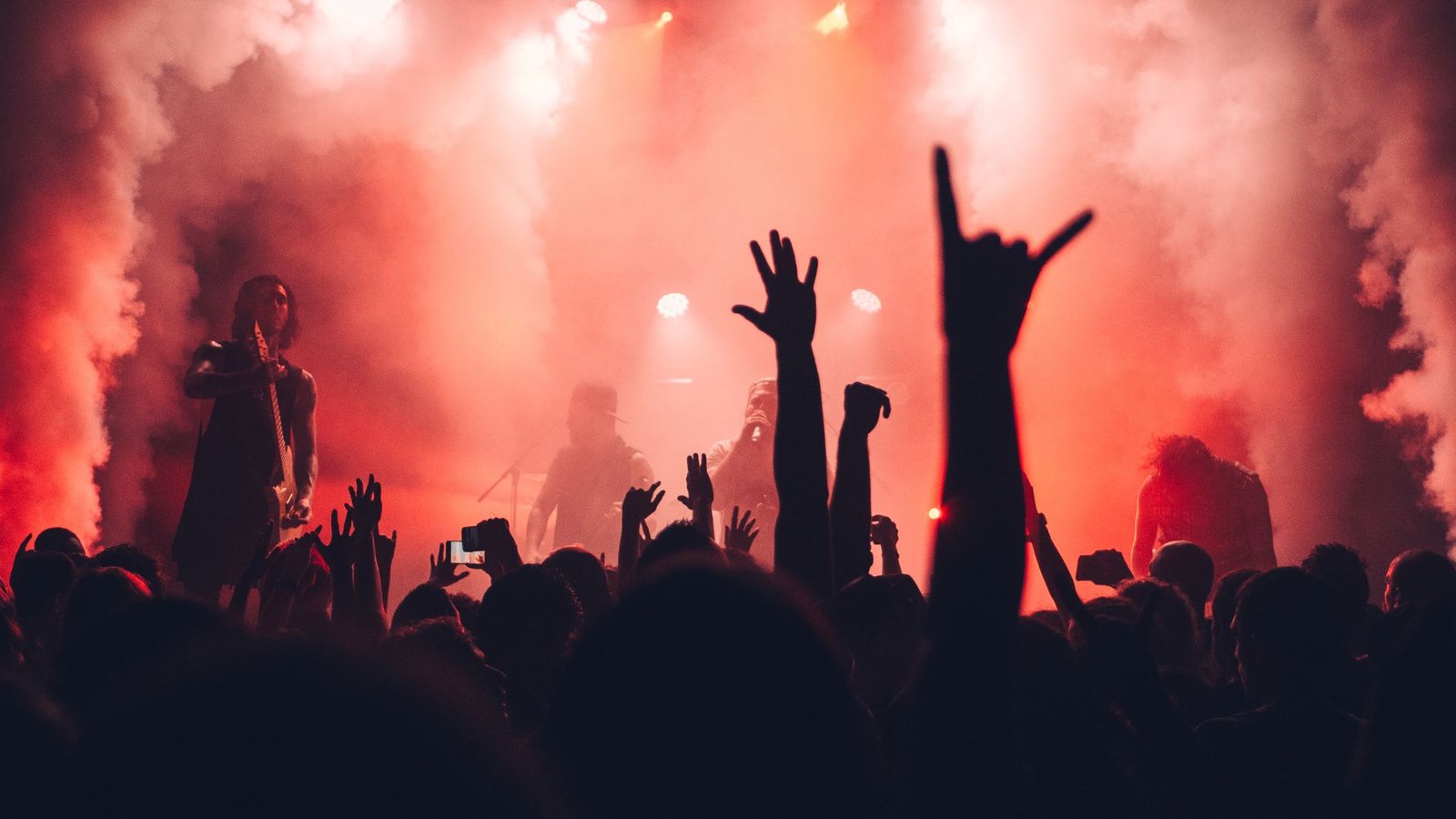
Heavy metal has been borrowing from gambling culture for decades. Playing cards, dice, roulette wheels and references to betting appear in lyrics, album sleeves and stage sets, where they work as shorthand for risk, chance and defiance.
Casino design is now borrowing some of that imagery back. Rather than treating rock as generic background music, some gambling platforms and entertainment venues are using music culture to shape everything from typography and game categories to merchandise and live-table surroundings. The cards themselves remain familiar. What is changing is the cultural setting in which they are presented.
Gambling Imagery Was Already Part of Metal
The relationship did not begin with online casinos. Motörhead's "Ace of Spades" is an obvious example, but card games, wagers and games of chance have appeared repeatedly across rock and metal because the symbolism fits the genre: uncertain outcomes, risk-taking and the possibility of losing everything on one decision. Those references are also visually useful. A hand of cards or a spinning wheel can communicate the idea immediately, without needing much explanation.
Digital casino interfaces can reproduce that language with little difficulty. A live casino ontario lobby, for instance, can place a standard blackjack stream inside a completely different visual setting by changing menu artwork, fonts, table surroundings, dealer styling and the content promoted around it.
This is less about inventing a new casino game than about borrowing the mechanics of music fandom. A familiar product is made to feel as though it belongs to a particular audience.
Metal Branding Goes Beyond a Soundtrack
Simply playing guitar-heavy music does not create a meaningful crossover. A more developed approach carries the genre through the entire platform. Game categories can be curated around a theme, while navigation, artwork and progression features reinforce the same identity. Ontario operators already experiment with these extra layers in other ways. ToonieBet, for example, uses features called Challenges and Collections around its casino offering, showing how the experience can extend beyond selecting an individual game.
A metal-focused platform could apply the same principle differently: themed collections, genre-based categories or progression tied to a particular visual concept rather than generic casino menus.
Metal is particularly easy to translate into design because it has unusually strong visual conventions. Dark palettes, gothic lettering, stage lights, amplifiers, leather, flames and illustrated album artwork are recognizable before any music plays. The strategy resembles what music festivals, clothing labels and record stores have long done: create a recognizable scene around the product itself.
What Changes at a Metal-Themed Blackjack Table
A live blackjack table still uses physical cards, a dealer and the usual decisions to hit, stand, double or split. Its mathematical characteristics continue to depend on the payout for blackjack, the number of decks, doubling restrictions and whether the dealer hits or stands on soft 17. A metal theme changes none of those figures.
What it can change is the production surrounding the game. Custom table felt, concert-style lighting, band-inspired artwork, music between rounds and different dealer wardrobe could turn an otherwise conventional stream into something closer to a small broadcast set.
That separation between rules and styling matters for consumers. A highly produced table may look exclusive while offering exactly the same conditions as a visually plain alternative. Payout rules, stakes and licensing therefore remain more informative than the theme when comparing tables.
Physical Venues Have Used This Formula for Years
The online version has a clear offline precedent. Rock-oriented entertainment properties have long placed casino tables beside concert spaces, memorabilia displays and bars. Guests can move from a music venue to blackjack or roulette without leaving the same themed setting. The gambling products are rarely redesigned around the music. Instead, the venue supplies the cultural context.
Digital platforms can reproduce that model more cheaply and change it more quickly. A physical gaming floor requires construction, signage and permanent fixtures. An online lobby can be reskinned or reorganized without replacing the software running the individual games.
That flexibility also makes narrower themes commercially possible. A physical venue needs enough foot traffic to justify the space. A digital platform can present a specialized category to a relatively small audience without dedicating an entire building to it.
A Fully Metal Live Table Is Still Mostly Untapped
The obvious next step would be a blackjack table built specifically around metal rather than simply appearing inside a music-themed lobby. A dedicated production could combine its own studio set, custom felt, concert lighting, curated music and artwork commissioned around a particular genre or performer. Dealer presentation could be designed for the concept from the beginning rather than added later.
The difficult part is commercial: whether a sufficiently large audience wants the theme often enough to justify dedicated studio production and licensing costs.
There is also a responsible-gambling consideration. Music, rapid visual feedback and elaborate production can blur the boundary between gambling and other forms of digital entertainment. Players may pay more attention to the atmosphere than to elapsed time or total spending. Anyone choosing to gamble should set spending and time limits beforehand and treat gambling as paid entertainment, never as a source of income.
For metal fans, getting "a table of their own" does not require rewriting blackjack. The more realistic evolution is cultural: taking an established card game and building a recognizable fan space around it.