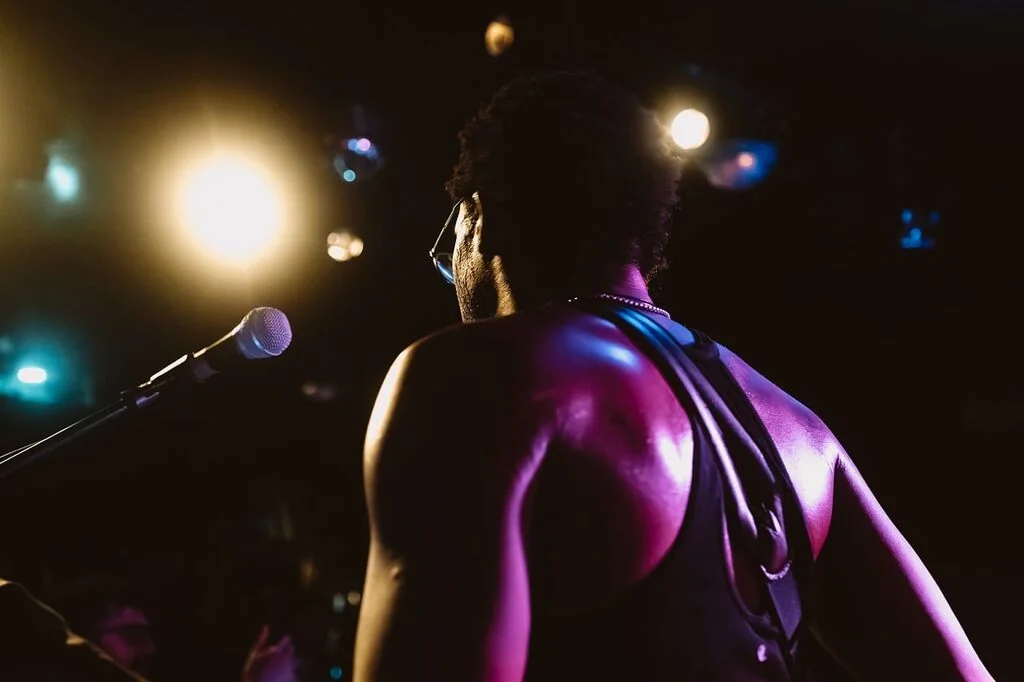
Somewhere around the third listen of “Emergence,” it clicked for a lot of people why the Recording Academy finally had to pay attention. The 68th Grammy Awards nominated Sleep Token for Best Metal Performance this cycle, sliding Vessel’s band into the same category as Ghost, a band the internet has been comparing them to since roughly the moment “Chokehold” hit a million streams. It’s not a lazy comparison either. Both acts built their entire commercial engine on the tension between a hidden face and a very loud voice, and both are now being asked, formally, by an institution that mostly ignores metal, whether that tension produces something award-worthy.
The nomination itself matters less than what it confirms. Sleep Token isn’t a niche streaming phenomenon anymore. They’re a band the Grammys feel they can’t skip, in the same breath as Dream Theater and Spiritbox. But the Ghost parallel deserves more scrutiny than a passing tweet gives it, because Ghost’s own frontman, Tobias Forge, has spent the better part of a decade being extremely candid about what anonymity actually costs a band once the mask starts working too well.
The Mask Economy: What Ghost Already Learned the Hard Way
Forge was outed as Ghost’s mastermind back in 2017, years before this current wave of masked-act discourse, and he’s said publicly that losing the anonymity was, in his own word, a relief. He told Louder in a recent interview that he “can’t eclipse what Ghost is,” adding flatly that he isn’t interesting enough as a person to compete with the character he built. That’s a strange thing for a rock star to say about himself, but it’s also the exact tension Vessel fans argue about constantly. Does knowing who’s behind Vessel change what Sleep Token is, or does it just satisfy curiosity without touching the actual art?
Ghost’s broader creative arc, from small Swedish occult-rock curiosity to arena headliner, gives Sleep Token a real template rather than a vague vibe. Both bands treated the mask as a production choice first and a marketing gimmick second, which is probably why both survived long enough to get nominated for the same trophy in the same year, according to Hennemusic’s coverage of this year’s Best Metal Performance field.
When a masked band’s gamble pays off this visibly, the payoff doesn’t stay abstract for long. Crews get bonuses tied to certification milestones. Merch runs sell out and get reprinted within days. Fans who backed the band early, buying vinyl sight unseen, betting on a project with no interviews and no faces attached, get their own small vindication when the trophy talk starts.
That vindication has a literal version too: sportsbooks run actual odds on Grammy outcomes every year, and Canadian fans who put money on Sleep Token or Ghost to win aren’t just watching the ceremony for fun. When a bet like that lands, the instinct is the same one that drives early album buyers — get the reward now, not buried three weeks deep in a processing queue. That’s part of why Canadian bettors tend to look for the best fast payout casinos in Canada, since slow cashouts kill the momentum of a win.
Gambling carries real risk, so treat it as entertainment, not a financial plan, and lean on ConnexOntario or a similar resource if it stops feeling fun.
Two Very Different Roads to the Same Category
Here’s where the comparison gets more interesting than a surface-level “both wear masks” take. Ghost built slowly. Forge spent years touring small venues, refining the theatrical bit, releasing four albums before mainstream crossover really hit. Sleep Token compressed that timeline dramatically. “Take Me Back to Eden” and the subsequent Billboard chart runs happened in a fraction of the time it took Ghost to get there, partly because streaming rewards a mystery-driven rollout in a way physical album sales in the 2010s simply didn’t.
Billboard’s own breakdown of the band’s crossover breakthrough makes a point that’s easy to miss: Sleep Token’s fanbase doesn’t behave like a typical metal audience. It skews younger, leans harder into TikTok discovery, and treats the “Sleep” mythology less like a gimmick and more like an actual belief system to decode. That’s a different growth engine than Ghost’s slower, arena-rock-adjacent climb, even if the destination category at the Grammys ends up looking identical on paper.
What both bands share, though, is the refusal to blink first. Forge has openly discussed how uncomfortable the early Ghost masks were, once comparing performing in them to “running 100 metres in flip-flops.” Vessel has never gone that far in public, but the physical toll of the persona clearly isn’t nothing either, judging by how rarely full-face reveals happen even backstage. Discomfort, in both cases, became part of the brand rather than a reason to drop the act.
So Who Actually Wins the Comparison?
Ghost has the trophy case. Forbes has tracked the band’s prior Grammy wins and nominations going back years, putting them in rare company alongside Black Sabbath and Slayer for genre recognition. Sleep Token doesn’t have that history yet. This is their first real shot at the trophy, not their fourth.
But recency counts for something too. Sleep Token’s commercial numbers right now, streaming totals, chart placements, first US platinum certification, are arguably outpacing where Ghost sat at the equivalent point in their own career arc. If the Grammy voters reward momentum over legacy this cycle, Vessel’s band has a real case. If they reward the band that’s already proven it can sustain a decade of theatrical anonymity without the wheels coming off, Ghost still holds the edge.
Either way, the fact that this comparison is even worth making, in detail, with actual data behind it, says more about Sleep Token’s trajectory than any single award result will.
FAQ
Is Sleep Token actually nominated against Ghost at the 2026 Grammys?
Yes. Both bands appear in the Best Metal Performance category at the 68th Grammy Awards, alongside Dream Theater and Spiritbox, for the current awards cycle covering the 2025 to 2026 eligibility window.
Has Tobias Forge ever confirmed he’s the person behind Ghost’s mask?
Yes, since 2017. Forge has spoken openly since then about what changed once his identity became public, including saying the reveal ultimately felt like a relief rather than a loss.
Did Sleep Token get a platinum certification before this Grammy nomination?
Yes. Sleep Token earned their first US platinum single certification in April 2026, a milestone that arrived shortly before the Grammy nomination news broke, reinforcing the sense of a rapid commercial climb.
Why do fans keep comparing Sleep Token to Ghost specifically, and not Slipknot?
Mostly because of the anonymity model. Slipknot’s masks function more like shock-value branding, while Ghost and Sleep Token both build an actual in-universe mythology around the hidden identity, which invites a closer structural comparison.
The Grammy nomination doesn’t settle the Ghost comparison. It just gives fans a fresh, dateable reference point to keep arguing about it, which, for a band built entirely on mystery, might be the most fitting outcome of all.