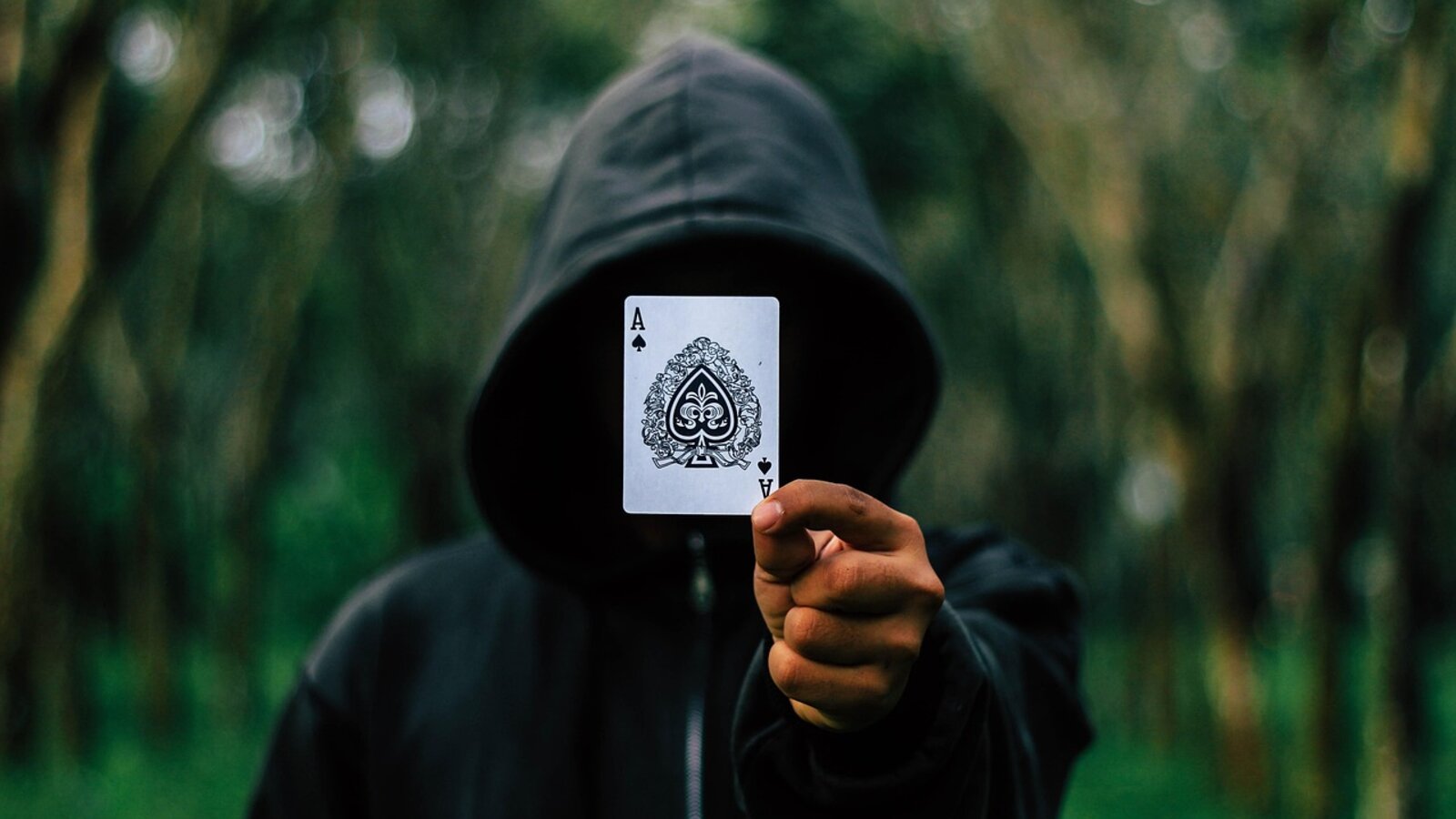
Seven cards. You get to see four of them. That's the whole information budget in a hand of Razz, and honestly, it's more than Sleep Token has handed anyone in ten years.
Since 2016 the band has walked on stage as Vessel, II, III and IV, faces covered, names replaced by numerals, with a story about a deity called Sleep doing the talking. Fans have spent that decade doing what a Razz player does on every street: staring at the cards that are face up and building a theory about the ones that aren't. Some of them are good at it. Most aren't. And the difference between the two groups is the same difference that separates a winning lowball player from a losing one.
Four Up, Three Down: The Information Game
Razz is seven-card stud played upside down. The lowest five-card hand takes the pot, aces are always low, and straights and flushes don't count against you. The perfect hand is 5-4-3-2-A, which players call the wheel. What makes it interesting isn't the ranking. It's the dealing. On third street you get two cards face down and one face up. Fourth, fifth and sixth street are all dealt face up. The seventh goes back face down.
So by the river, everyone at the table can see four of your cards. They can also see four of everybody else's. What they can't see is the three that decide the hand.
That's Sleep Token's whole model, only they picked which four cards to turn over.
| Razz | What the table sees | Sleep Token equivalent |
|---|---|---|
| Door card | Your first exposed card, before any betting | The mask and robes, the first thing anyone sees |
| Board | Four exposed cards by sixth street | Numerals, tattoos, height, the voice itself |
| Hole cards | Three cards nobody else can look at | Names, faces, biography |
| Betting pattern | Who raised, who called, who folded | Album lore, interviews refused, credits filed |
The exposed cards aren't random either. A mask hides a face but it can't hide a vocal range, a set of hand tattoos or the way someone carries a microphone. Those are the board. Every serious fan theory about the band's identity has been built on them, the same way every serious Razz decision is built on what's already showing.
Why Lowball Feels Like Sleep Token
Most people meet Razz after years of Hold'em and hate it for a week. A pair, which they've spent their whole poker life wanting, suddenly ruins the hand. A king is a disaster. An ace-to-five with nothing paired is the best thing that can happen to you. The rules of "good" got flipped, and the brain fights it.
Metal audiences went through something similar in 2023. Take Me Back to Eden put falsetto, piano ballads and R&B phrasing next to some of the heaviest breakdowns of the year, and a sizeable chunk of the genre's old guard called it soft. Two years later Even in Arcadia opened at number one on the Billboard 200. The things that were supposed to count against the band didn't count against it at all. A bit like straights and flushes in Razz. They look like they should matter. They don't.
Here's the catch. Inversion only works if the execution is precise. A Razz player who chases low cards without counting what's dead loses just as fast as a Hold'em player who chases flushes. A band that only inverts metal's rules, without the songwriting to back it, ends up as a novelty act. Sleep Token's trick isn't that they broke the rules. It's that they broke them cleanly enough that the result still looks like a made hand.
Five Things Razz Players Do That Fans Are Already Doing
I spent an evening at the free tables on Razz Poker before writing this, mostly to remind myself how the game punishes lazy reading. The strategy section there has a line I keep coming back to, from its guide to reading players: "A player who calls a raiser usually has a good but not great hand. If they could beat a 7 low, they would have re-raised." Swap the poker words for fandom words and it still reads true. Five habits carry across directly:
- Track the exposed cards, all of them. A Razz player counts every low card that's been folded, because each dead ace or deuce makes it harder for opponents to improve. Fans do the same with tattoos, rings and session credits. The information is public. The skill is remembering it.
- Read the door card against the raise. If someone raises showing an 8 while two aces and a three are on the board around them, their hole cards are either perfect or they're stealing. When a band with no faces puts out a press statement in the voice of a deity, that's a raise with an 8 showing. It might be backed by something real. It might be theatre. You don't know yet.
- Callers have "good but not great." The fans who accept the ritual and enjoy the show are calling. The ones who dig through company filings are re-raising. Neither is wrong. But only one of them is going to see the hole cards, and it's not always the one who pushed hardest.
- Don't chase a hand that's already dead. Once you pair on fifth street with three low cards showing across the table, you fold. Once Sleep Token's masks became the point rather than a gimmick, chasing a face reveal became a losing line. The band isn't going to turn that card.
- Position matters more than the cards. In Razz the lowest board acts first after third street, which means the strongest visible hand is forced to show intent before anyone else does. Being forced to speak first is a weakness. Sleep Token has never once spoken first.
The Bring-In: Whoever Shows the Worst Card Speaks First
There's a rule in Razz that new players find cruel. After the first three cards, the player showing the highest door card, meaning the worst one, has to post a forced bet called the bring-in. You didn't choose to enter the pot. Your exposed card chose for you.
Sleep Token got their bring-in around 2023, when songwriting registrations and UK company records with real names on them started circulating in fan spaces. Those weren't leaks in any dramatic sense. They were public documents, sitting face up the whole time. The only thing that changed was that somebody at the table finally looked.
What happened next is the part I find interesting. The band didn't act. No statement, no confirmation, no denial. They let the forced bet sit there and kept playing the hand exactly as before. And the fandom, without being told, mostly decided to treat the hole cards as off-limits. Community moderators wrote rules against sharing unmasked photos. Threads that named names got deleted by the people who'd opened them. I've watched a thread go from a paparazzi-style photo to a self-imposed takedown in under twenty minutes, which isn't something I've seen in any other fandom of that size.
But does the comparison actually hold up once real people are involved instead of cards? I think it holds up better, not worse. In Razz, reading the board is the game. Looking at someone's hole cards is cheating, and everyone at the table agrees on where that line is. The Sleep Token community arrived at the same line on its own: what's on the board is fair to discuss, and what's in the hole isn't yours to turn over. That's not censorship. It's table etiquette.
Player Types at the Table and in the Fandom
The Razz strategy guides sort opponents into five rough types. Every one of them has a seat in the Sleep Token comment section too.
- The tight player waits for premium starting hands and rarely bluffs. In fandom terms, this is the listener who bought the vinyl, went to two shows and has never once typed the words "who is Vessel" into a search bar. Boring at the table. Usually ahead at the end of the night.
- The over-aggressive stealer raises with a 9 showing because they assume everyone else will fold. This is the account that posts "confirmed: it's definitely X" every six weeks with a new X. They win small pots from people who don't push back, then lose a big one to anyone who does.
- The limper wants in cheap and hopes the hand makes itself. The casual fan who found "The Summoning" on a playlist, enjoys the mystery in passing and never really engages either way.
- The slow-player has the wheel and checks. Quiet fans who worked out most of the picture years ago and never post about it. You only find out they knew when the conversation is already over.
- The winning player varies their approach so nobody can build a pattern. That one's the band. Ten years in, and nobody can predict when the next card gets turned, or if it ever will.
Now for the unpopular part. Despite what most of the forums say, I think the unmasking obsession has made a portion of the fandom worse at hearing the music. Nope, not "less pure" or "less respectful". Worse at listening. A Razz player who spends every street staring at one opponent's board misses the other five boards and the pot odds. A listener who treats every lyric as a clue about a person's biography stops hearing what the song is doing on its own terms. The masks were designed to prevent exactly that, and they were right.
What the Wheel Teaches About a Band Called II, III and IV
The perfect Razz hand is 5-4-3-2-A. Five low cards, no pairs, nothing wasted. Poker players call it the wheel, or the bike, and the odd thing about it is that its strength comes from how little each card is worth. The ace, the lowest card in the game, is the one that makes the whole hand.
Sleep Token named its members with numerals, and nobody outside the band has ever explained why the counting starts at two. Vessel doesn't carry a number. He sits below the others in the order and defines the hand anyway, which is a fairly exact description of what an ace does in lowball. I don't think that's intentional. I do think it's a useful way to see the project. Each member is deliberately small: a numeral, a mask, one function on stage. Together they're a made hand, and the fact that no single card is big is the point.
Wrong hand for Hold'em. Perfect hand for Razz.
So the next time someone tells you that the masks are a gimmick, or that a fan base built on guessing is bound to burn out, remember what a lowball table teaches after an hour of play. The people who last aren't the ones who see the most. They're the ones who read what's showing, respect what isn't, and don't chase the card that was never going to turn — the same discipline that keeps a Razz player solvent and a masked band unreadable ten years on.
FAQ
Is Razz poker actually connected to Sleep Token in any official way?
No. The band has never referenced poker. The comparison is structural: both revolve around reading exposed information while the deciding cards stay hidden.
Why do straights and flushes not hurt you in Razz?
Because Razz only ranks hands by their highest card downward, ignoring suits and sequences. A 5-4-3-2-A straight is simply the lowest possible five cards, so it's the best hand, not a penalty.